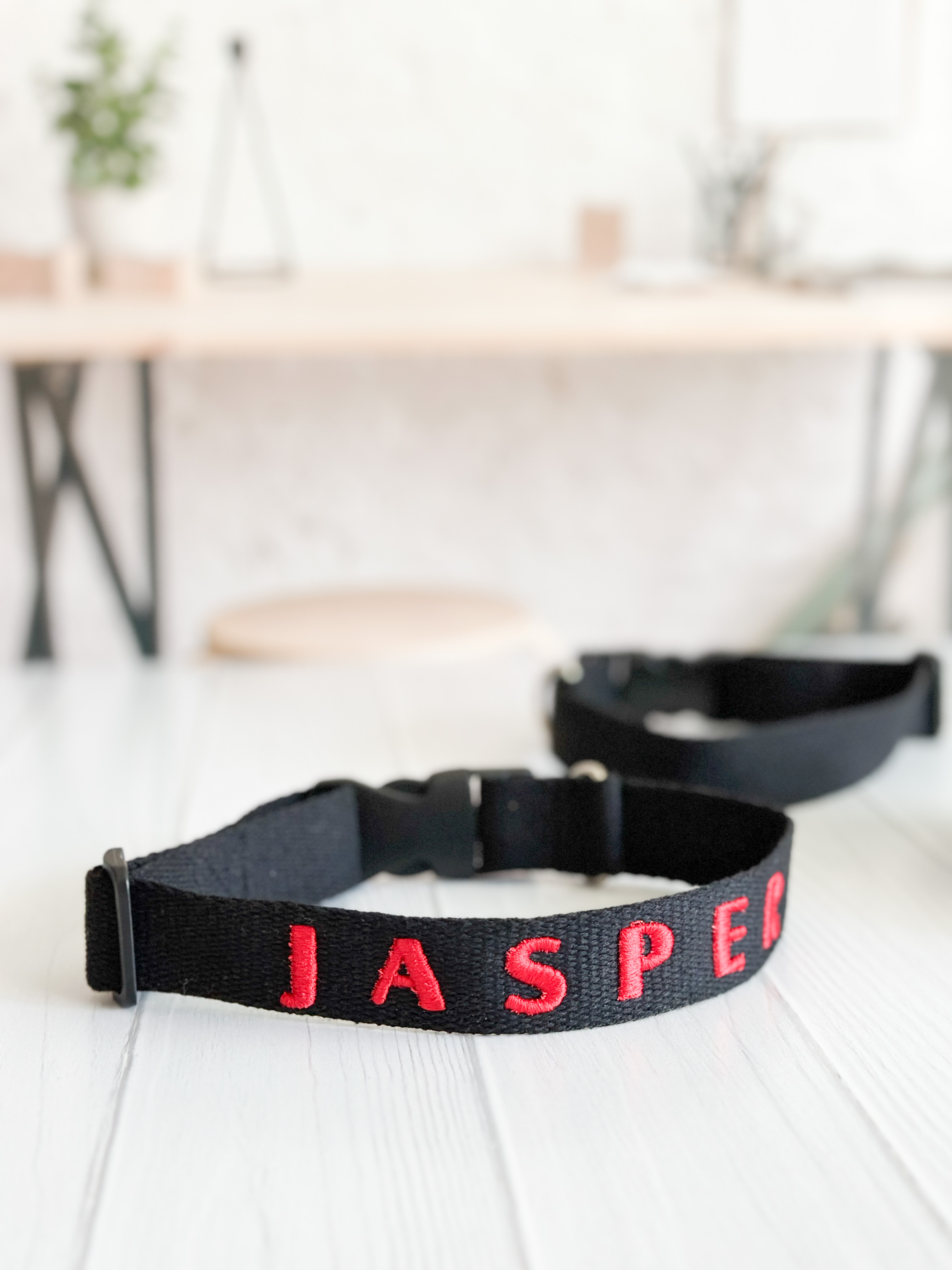
How to Sew and Embroider a Web Collar and Leash

Hello everyone!! Today, we’re diving into the world of sewing and embroidery to guide you through the process of making a web collar and leash for your beloved four-legged friend. Not only will this project result in a practical accessory for your pet, but it also provides an opportunity for creative expression and customization. So, gather your materials, unleash your creativity, and let’s embark on this crafting adventure together!

Materials Needed:

  • Cotton Webbing
  • Snap Buckle
  • Metal D-Ring
  • Slide Lock
  • Thread: all-purpose & embroidery
  • Embroidery Needle 75/11
  • Foam
  • Rotary Cutter & Mat
  • Ruler
  • Pins
  • Lightweight Tear-away Stabilizer
  • Tear-away Stablstick Stabilizer
  • Water Soluble Topping
  • Sewing Machine
  • Embroidery Machine
  • Specialty Hoop: Belt Hoop for multi-needle machines
  • Store-bought leash

Making the Collar

Measure and Cut
1. Measure your pet’s neck to determine the size of the collar.
2. For this collar, one piece of cotton webbing was cut to 26″ long for a small dog.

Create the Design
1. Use the built-in fonts in your embroidering software to spell out your pet’s name. If you have a font that supports foam, use that to create puffy letters.
2. Add other designs from your embroidery library if you like.
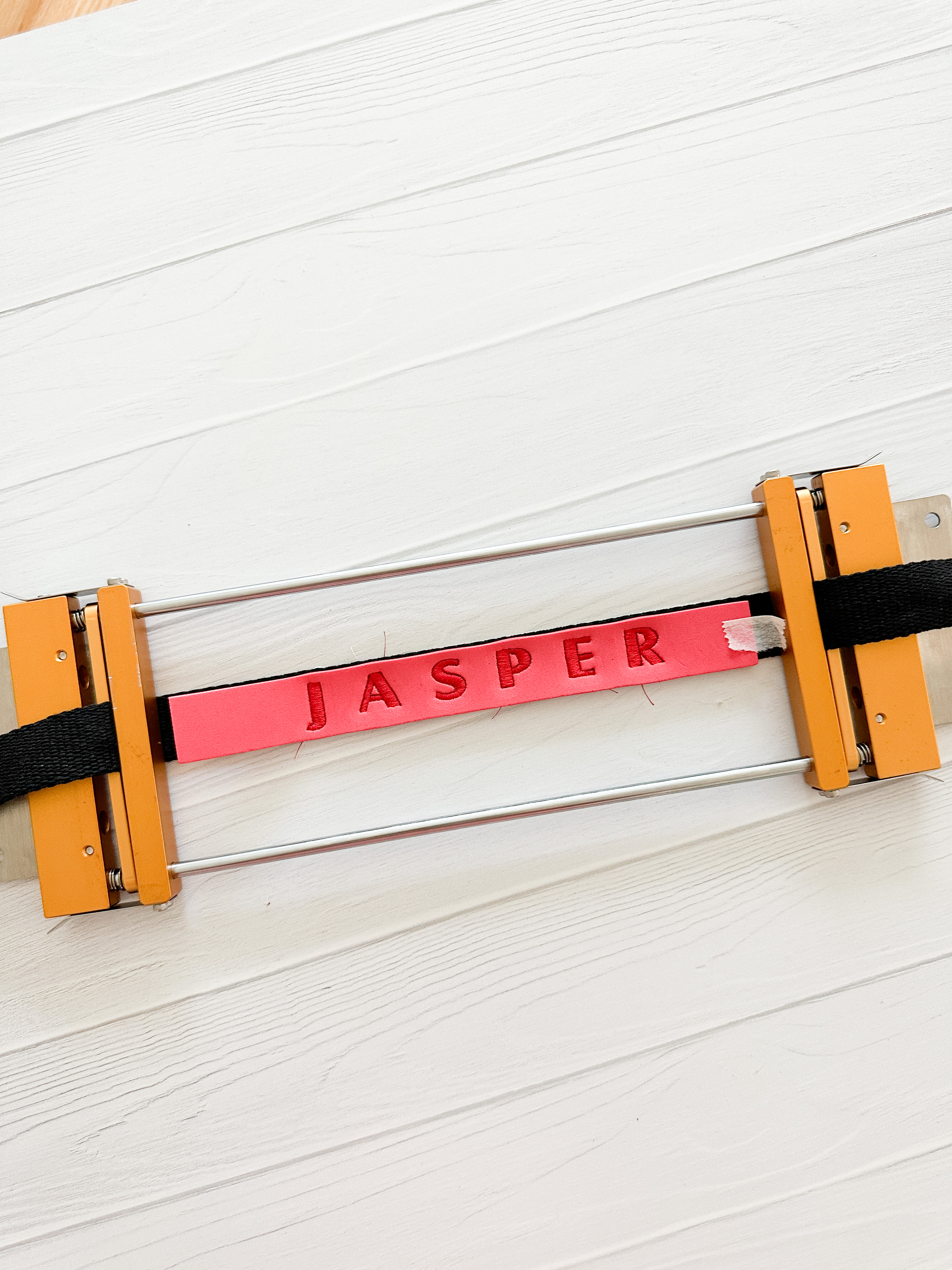
Stitch Out The Design
1. Find the center of the collar and place a stitch sticker to identify it.
2. Hoop the Lightweight tear-away stabilizer and the cotton webbing in the belt hoop.


3. If you don’t have a belt hoop, hop a piece of tear-away stablestick stabilizer.
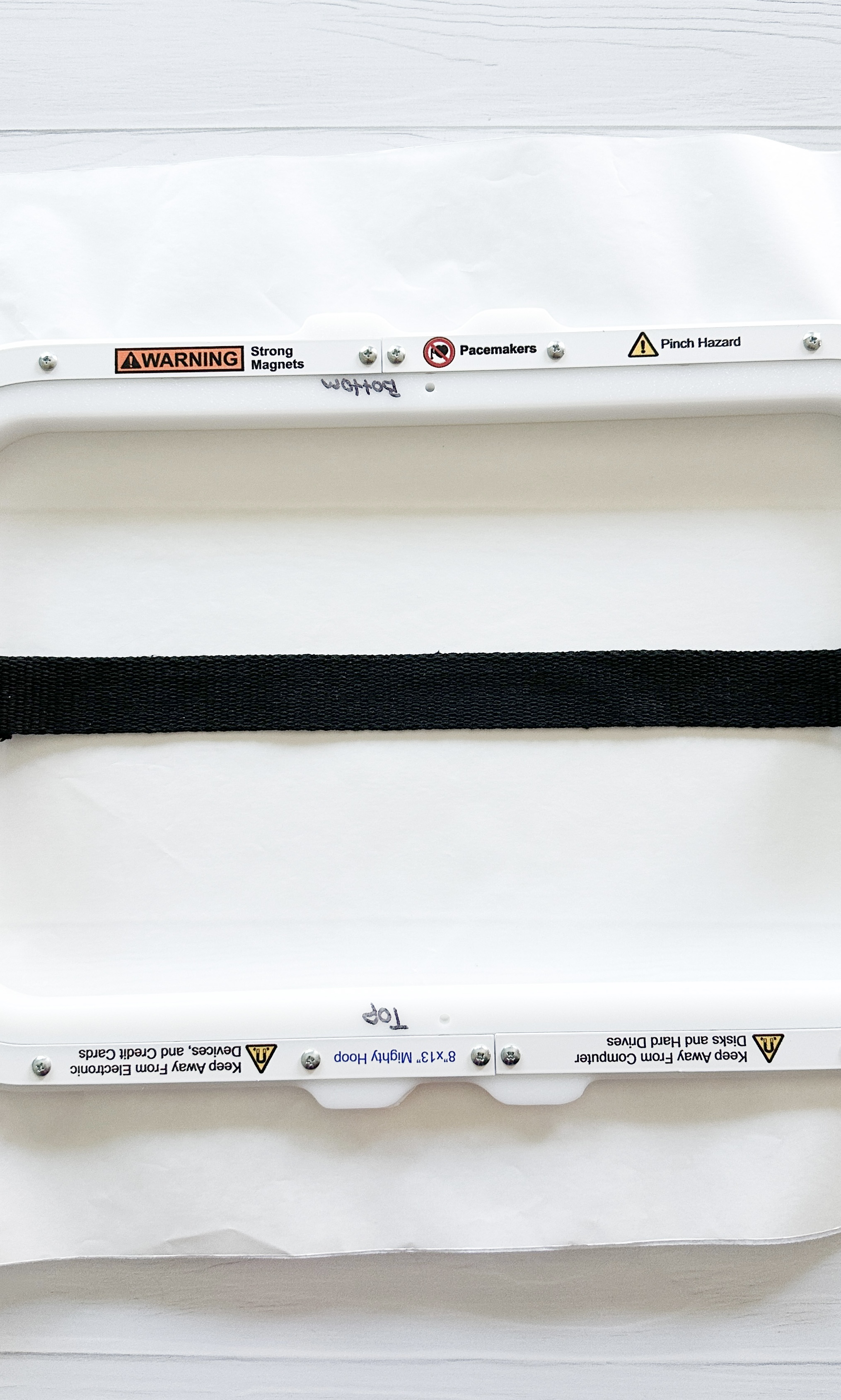

4. Place the webbing on the stablstick in the center.
5. Pull up the design on the embroidery machine screen, set the speed, choose the automatic/manual function, choose the different thread colors and hoop size, and then trace out the design to ensure the needle will not hit the hoop while it stitches out.
6. Stitch out the design.
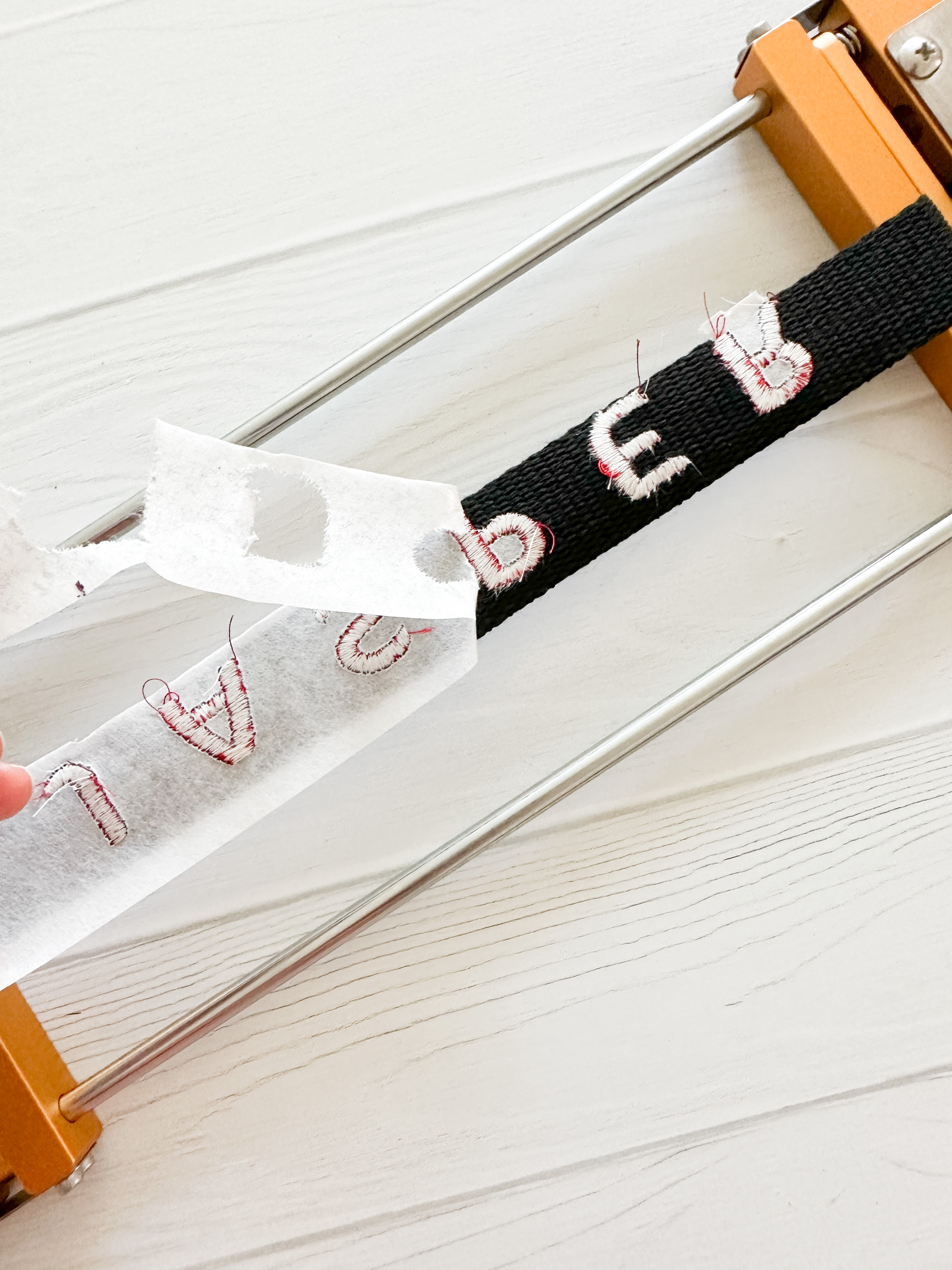
7. Remove the hoop from the machine and the fabric from the hoop.
8. Trim the thread ends and the stabilizer on the back.
Construct the Collar
1. Feed 2 inches of webbing through the slide lock, ensuring the embroidered side is in the correct direction.


2. Stitch together in the shape of a square.
3. Feed the webbing through the buckle so the embroidery faces the outside.


4. Feed the webbing through the slide lock again. The buckle will be enclosed.
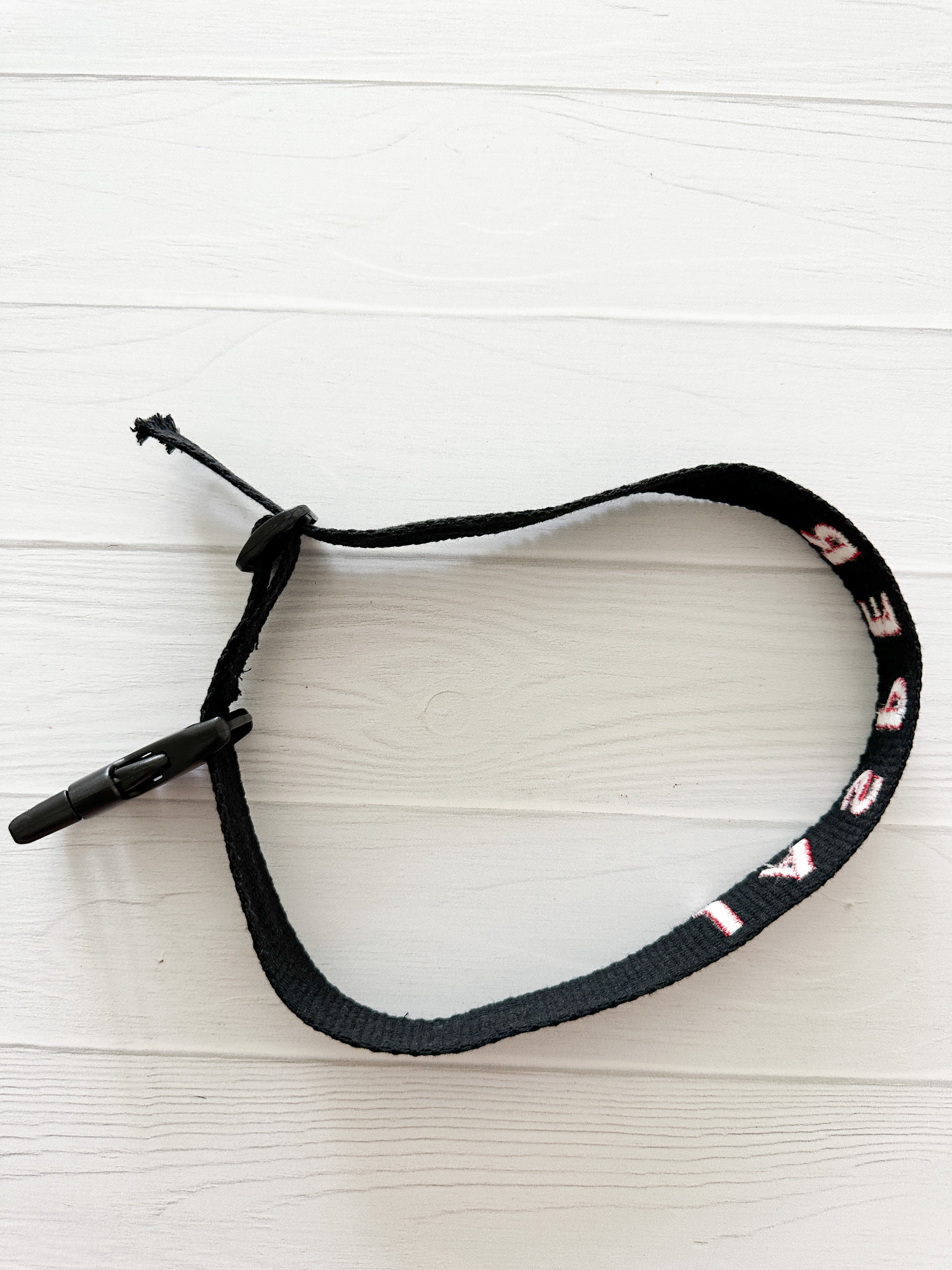

5. Pull the webbing through the D-Ring and the snap side of the buckle.
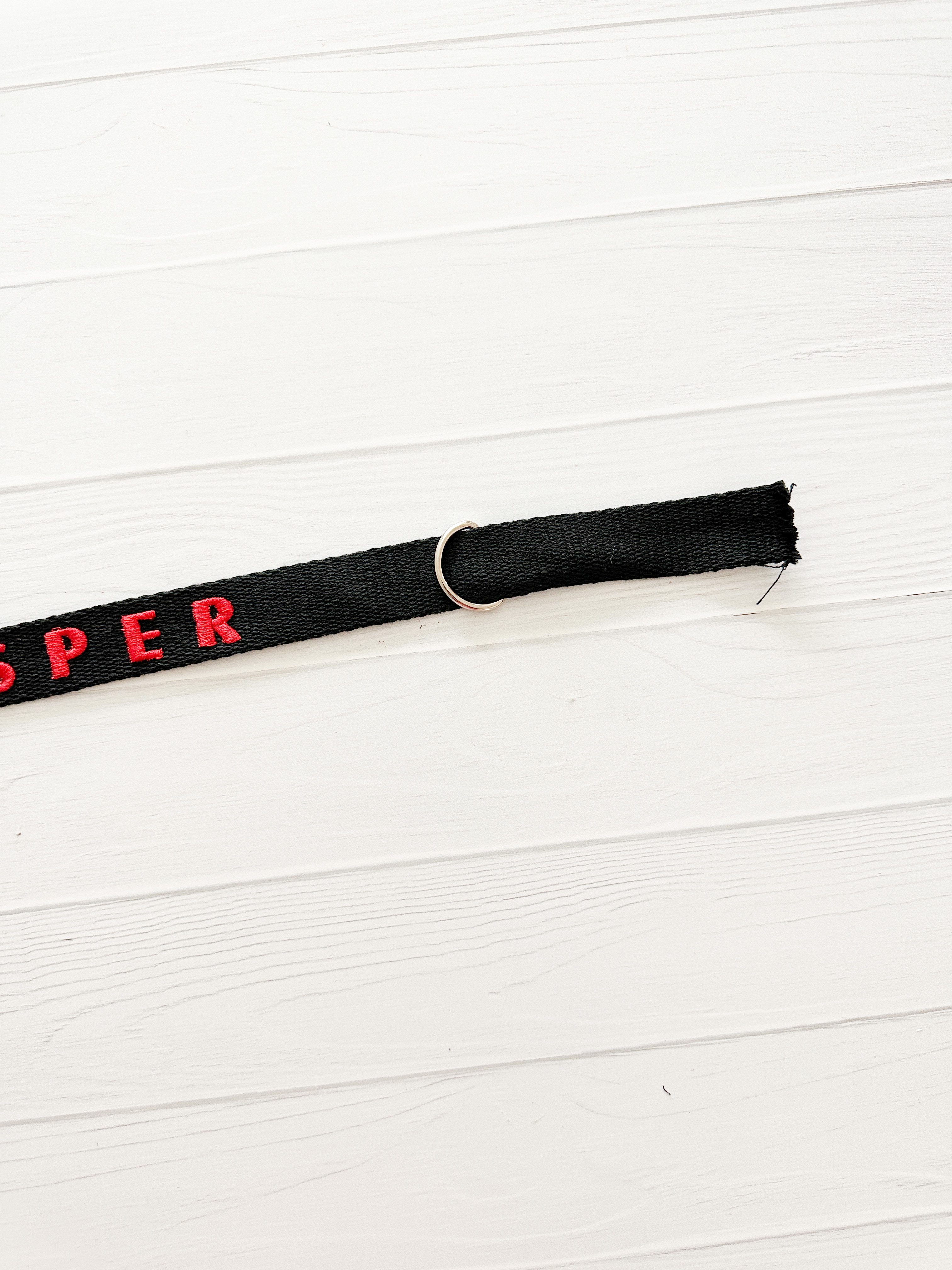
 
6. Feed the webbing 4 inches back through the second opening closer to the chip part of the buckle.

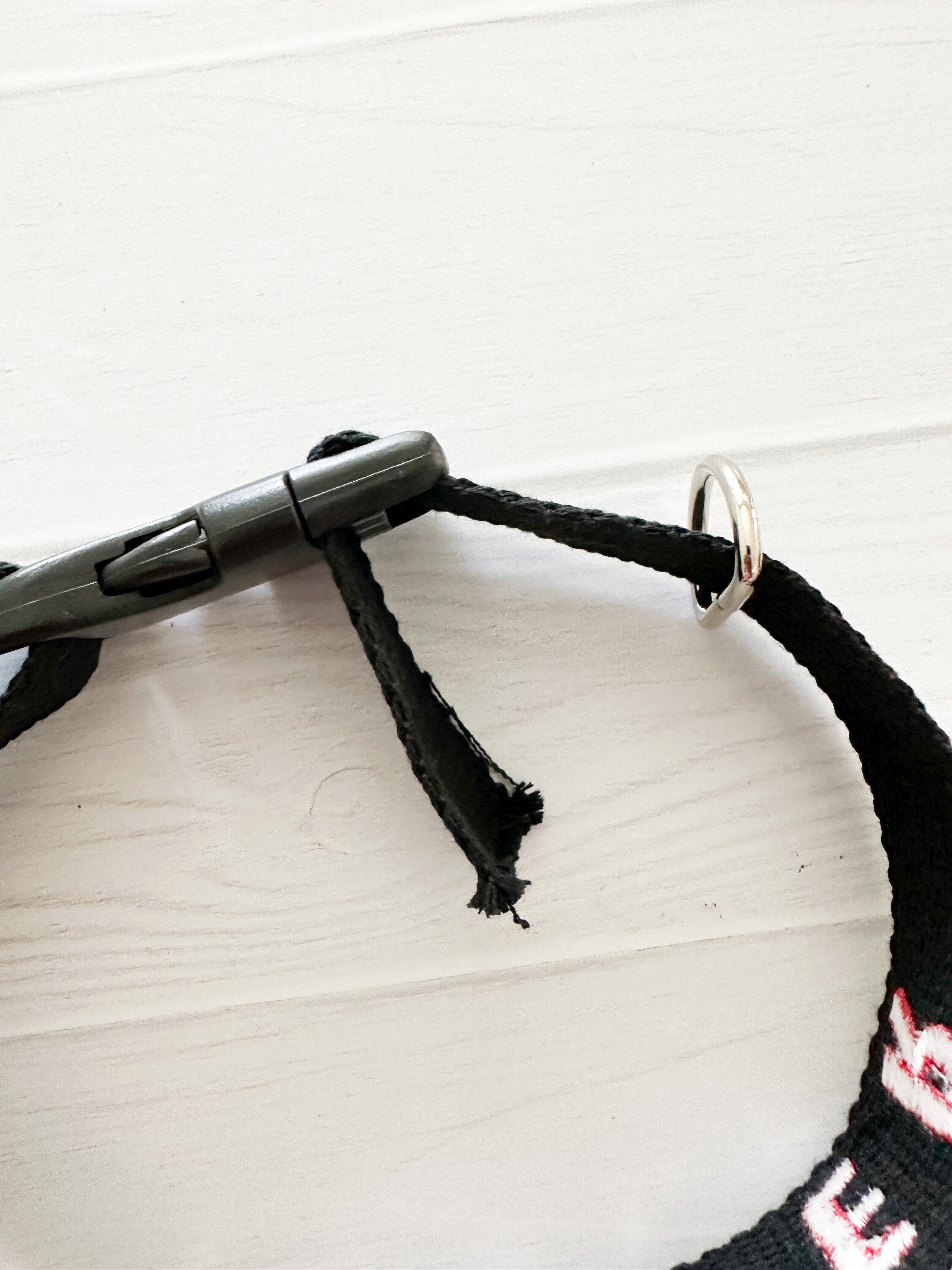
7. Pull the webbing around the D-Ring and through the opening, bringing the webbing back to the buckle and clip.


8. Sew through the three layers of webbing in 3 straight lines. This will keep the D-Ring in place.
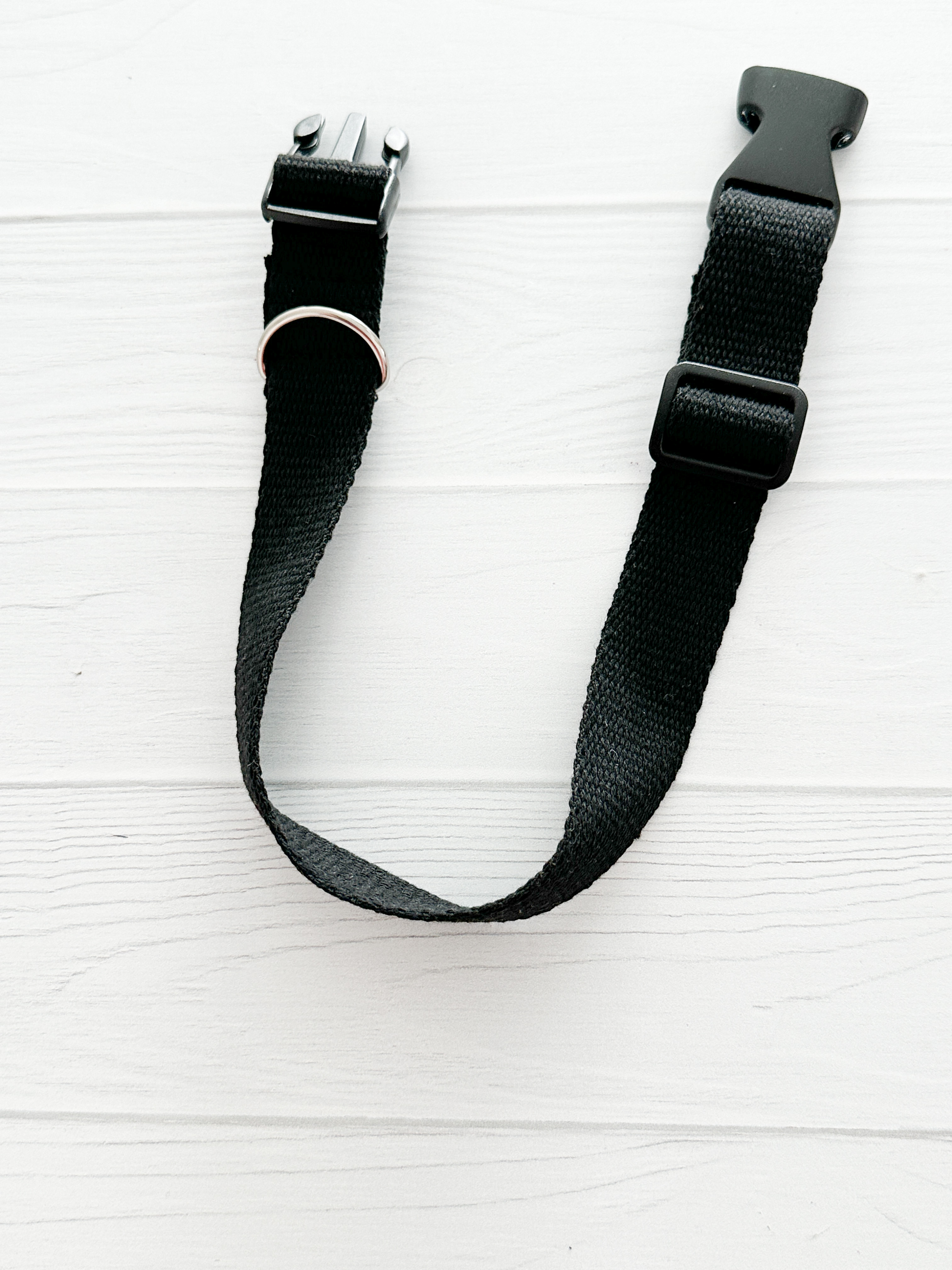
Stitching out the Store Bought Leash
1. Use the same design for the collar, hoop the leash, and stabilizer if your are using the belt hoop or hoop the stablstick and place the leash in the center of the hoop.
2. Follow the instructions for stitching out the collar. 

    Yayyy, isn’t this collar and leash super cute.

    Dog Collar Safety Tips!
    1. Make sure your dog’s collar fit and size are correct.
    2. Always remove the collars and leash during playtime, at home, and in crates.
    3. Yanking or jerking a leash can injure your pet.
    4. Keep your leash in good shape.

    I hope you make one or two from your beloved pets.

    See you next time!
    Kymona

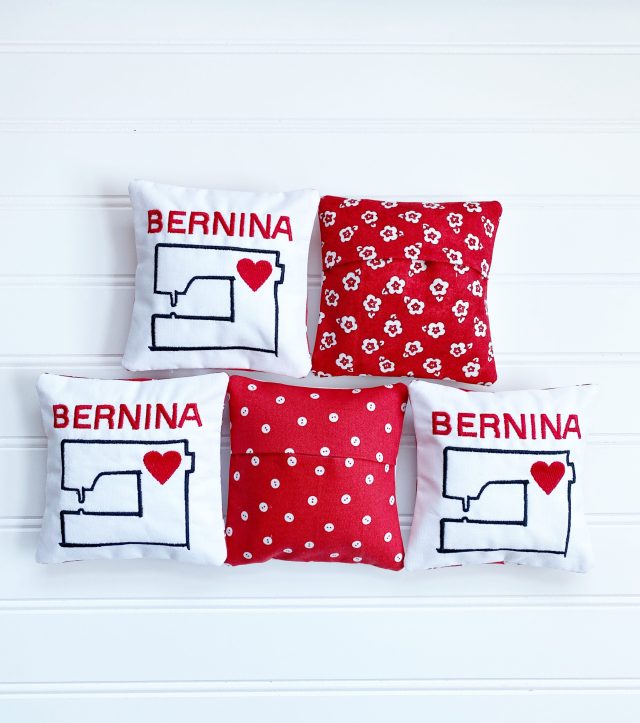
    How to Make An in-the-Hoop BERNINA Pincushion

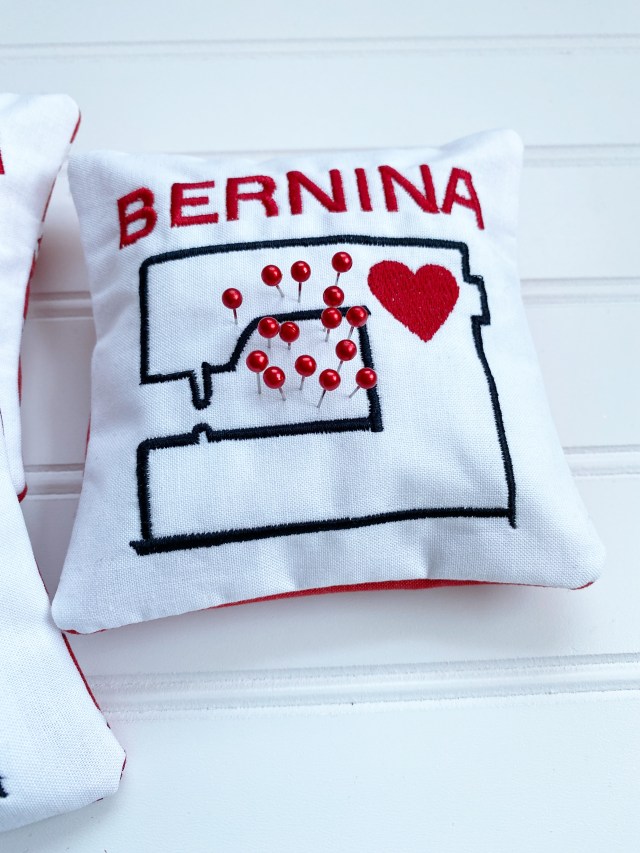
    Hello everyone! I’m here today to show you how to make an in-the-hoop BERNINA pincushion. It is National Quilting Month, and quilters use many pins; I figured this would be a fantastic project to try out.

    Pincushions are small, stuffed cushions, typically 3-5 cm across, used in sewing to store pins or needles with their heads protruding to take hold of easily, collect them, and keep them organized. They come in all forms. Today we are making small pillow pincushions.

    Let’s take a look:

    In the Hoop BERNINA Pincushion: Finished Product

    Are you excited as much as I am? I love these pincushions. They are perfect since my favorite sewing machine is the BERNINA 570 QE!!!!

    In the Hoop BERNINA Pincushion: Finished Product

    Here’s how to make them:

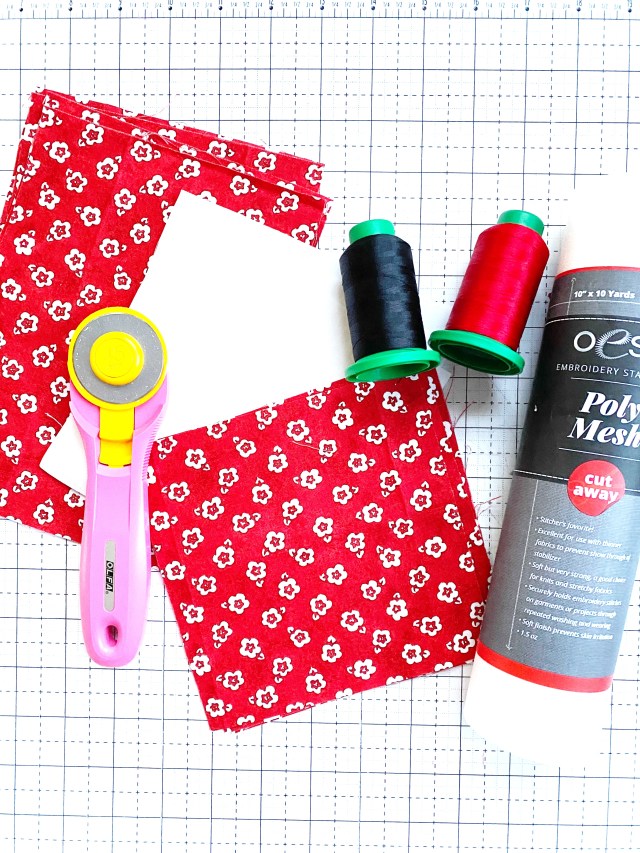
    Material:

    Bernina Love Pincushion Embroidery File
    OESD PolyMesh Stabilizer
    Isocard Black Thread – 0020
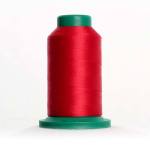
    Isocard Red Thread – 1902
    Expert Point & Press Tool 
    Embroidery Tape
    Basting Adhesive
    Polyfill

    In the Hoop BERNINA Pincushion: Materials

    Instructions

    You will find the complete step-by-step instructions when you download the file.

    Step 1: Cut fabric

    Cut 2 pieces of fabric for the front and back of the pincushion.

    Cut 2 pieces of fabric for the pincushion pillow form.

    Cut a piece of PolyMesh stabilizer bigger than the hop.

    Step 2: Prepare hoop and select the design

    Hoop a piece of PolyMesh stabilizer by itself.

    Select the design you want to use and load it into your machine.

    Step 3: Stitch out the design

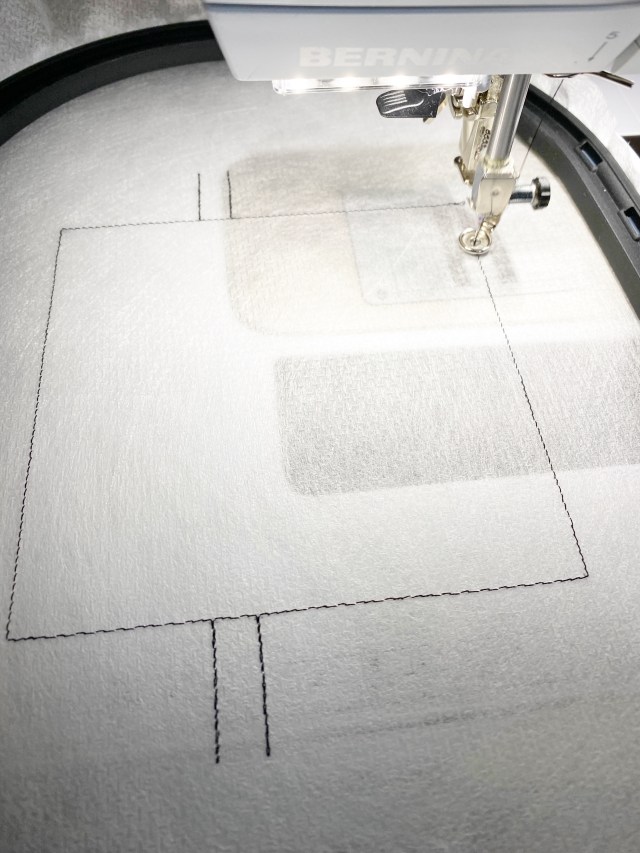
    Stitch the placement line.

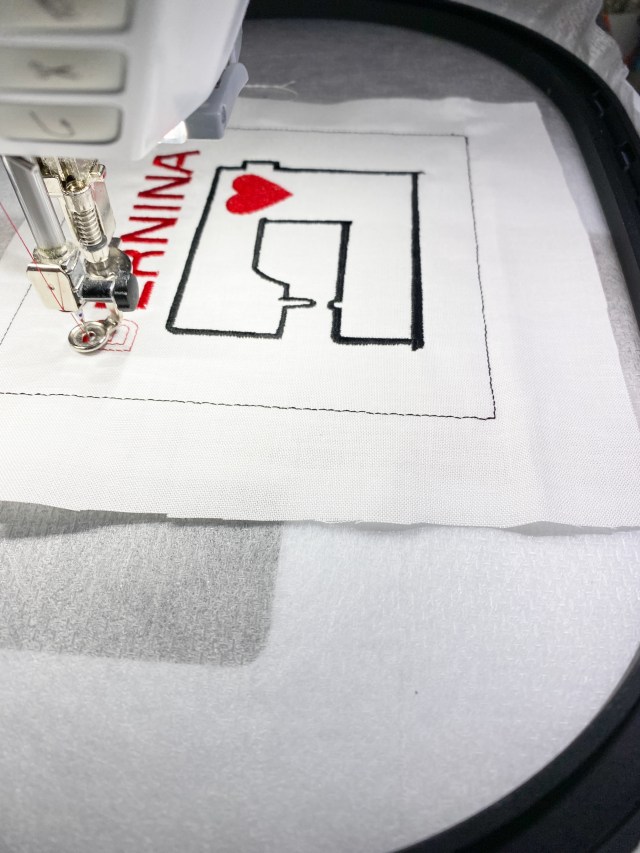
    In the Hoop BERNINA Pincushion: Stitching out the design

    Either spray basting adhesive or tape down the front fabric centered of the placement line.

    Stitch out the design. Changing colors when directed.

    In the Hoop BERNINA Pincushion: Stitching out the design

    In the Hoop BERNINA Pincushion: Stitching out the design

    In the Hoop BERNINA Pincushion: Stitching out the design

    In the Hoop BERNINA Pincushion: Stitching out the design

    In the Hoop BERNINA Pincushion: Stitching out the design

    Step 4: Adding the pincushion backing

    There are two pieces to the back of the pillow.

    In the Hoop BERNINA Pincushion: Adding the pincushion backing

    In the Hoop BERNINA Pincushion: Adding the pincushion backing

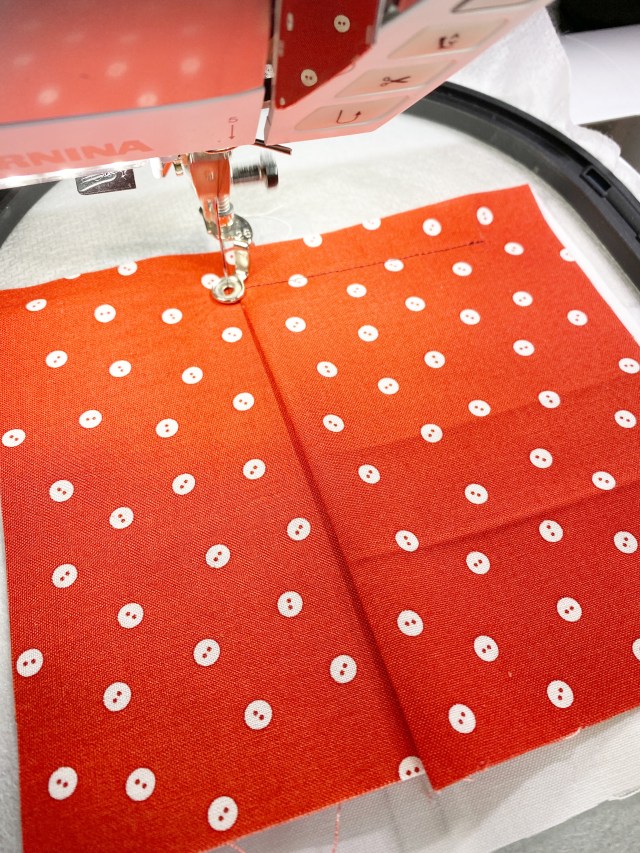
    Fold both according to the instruction and place them down on the stitch placement lines.

    Stitch the back of the pillow on.

    Step 5: Finish the pincushion

    Remove the project from the hoop.

    In the Hoop BERNINA Pincushion: Finish the pincushion

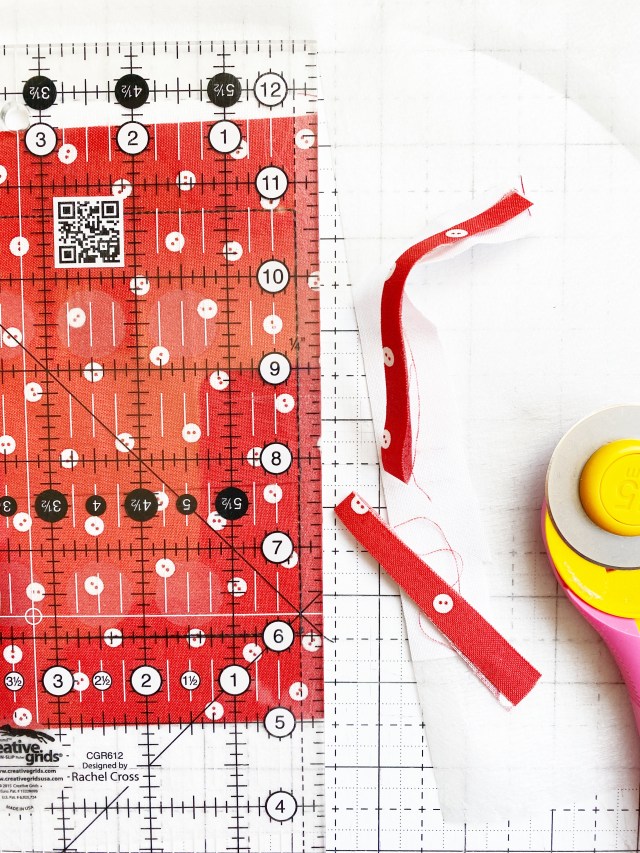
    Trim the project 1/4 inch from the seam line.

    In the Hoop BERNINA Pincushion: Finish the pincushion

    Turn the pincushion inside out.

    Use a point turner to push the corners out.

    Step 6: Sew a pillow form

    Take the extra two pieces of fabric cut for the pillow form and sew them together using a 1/4 inch seam allowance.

    Leave a 2-inch opening.

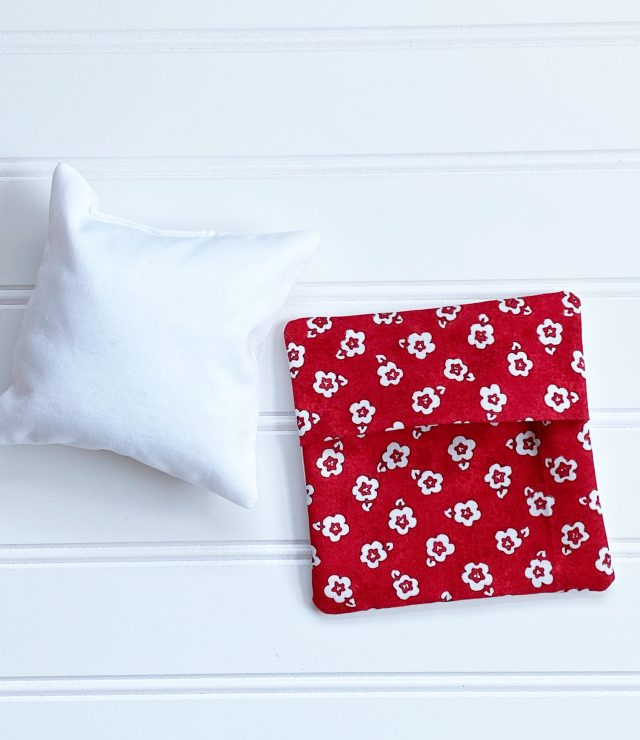
    Turn inside out, push out the corners, and stuff with polyfill.

    Stitch the opening closed and place the pillow form inside of the pincushion cover.

    In the Hoop BERNINA Pincushion: Finished Product

    In the Hoop BERNINA Pincushion: Finished Product

    Finished!!

    How amazing are these!

    In the Hoop BERNINA Pincushion: Finished Product

    In the Hoop BERNINA Pincushion: Finished Product

    These would look so cute right up on your sewing machine. You can also make tons of these to give away to people you love.

    So what do you think? Will you create your own BERNINA pincushions? I would love to know and please share your finished products.

    Supplies used:

    There are some compensated affiliate links used at no cost to you. 

    BERNINA Pincushion

    Thank you so much for stopping by!!

    How to Create Flannel Floor Pillows with an Invisible Zipper

    Hello everyone!! I’m here today to show you how to create flannel floor pillows with an invisible zipper.  Floor pillows, you say? Yes, I recently refinished my hardwood floor and wanted to provide my nieces and daughter with a place to sit comfortably when hanging out.

    Floor pillows are easy to sew, and with a zipper, you can even wash it when it gets dirty. Now, that is a great reason to make some.

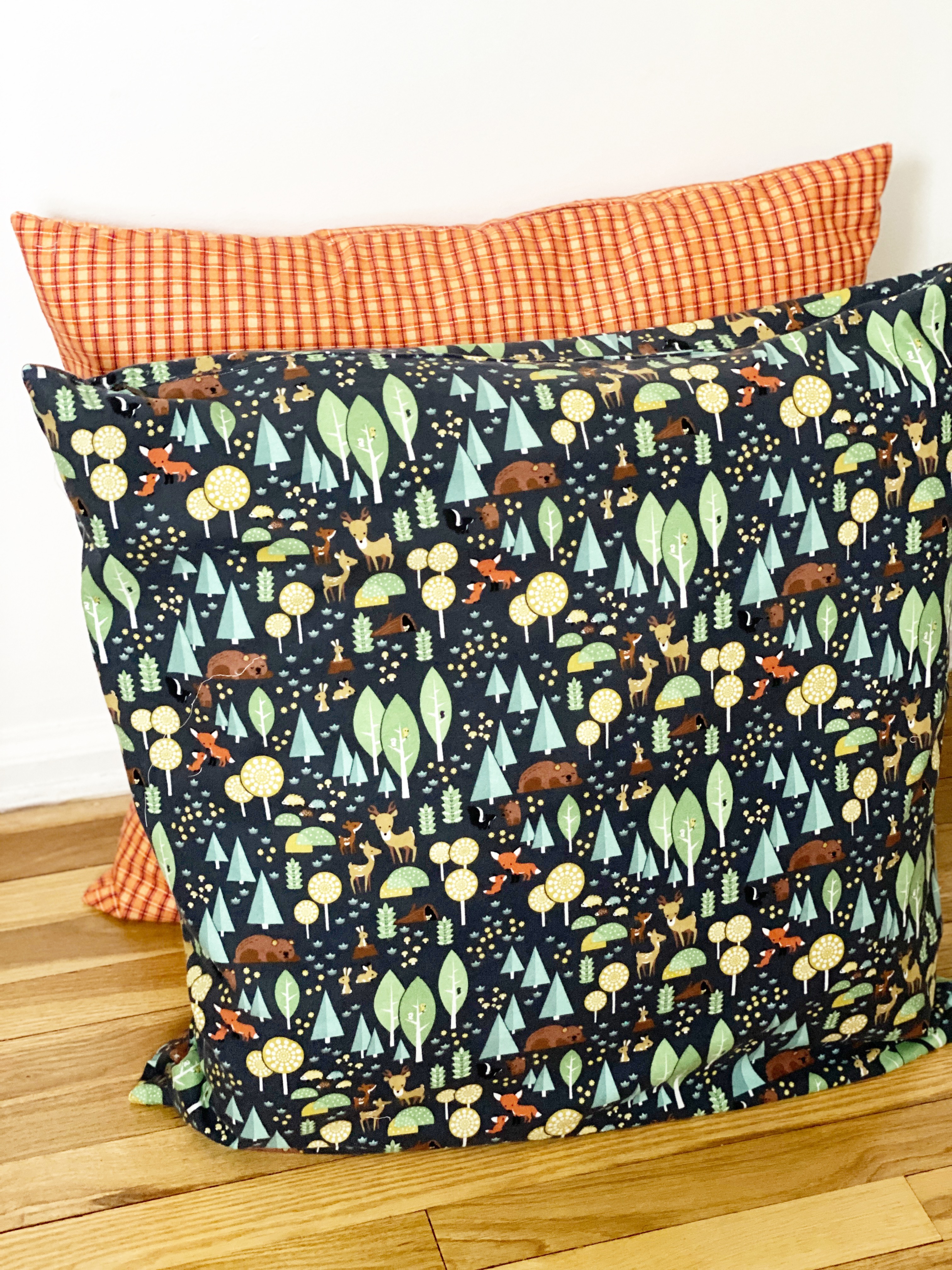
    Let’s take a look at my floor pillows:

    What do you think? Aren’t they cute? My nieces and daughter will enjoy these.

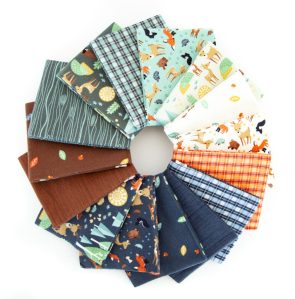
    Let’s take a look at this fabric collection:

    This cozy and soft flannel collection was created by Ben Byrd for Riley Blake Design. It comes in a palette of earth tones – green, orange, brown, navy, and parchment. Some prints have forest animals and trees.

    It’s full of fun and playfulness.

    Here’s how to create these pillows:

    Materials:

    Note: Some of the links below contain affiliate links.

    Woodland Flannel Fabric
    Aurifil White Thread
    Pins
    Cutting Mat
    Ruler
    Rotary Cutter 
    Quilting Ruler
    Matching Invisible Zipper
    Pillow Form

    Instructions

    1/2 inch seam allowance unless otherwise noted.

    Step 1: Measure Pillow Form

    Measure the pillow form to determine how big you want to make your pillow cover. If you’re going to make your own pillow form, determine what size you want the pillow.

    Step 2: Cut the fabric

    Cut 2 pieces of the woodland fabric to the size of your pillow form.

    For the orange pillow, I made the pillow form 30 inches by 30 inches. The blue pillow, the pillow form is 27 inches by 27 inches. I cut the fabric according to these measurements. 

    Step 3: Mark the fabric for zipper placement

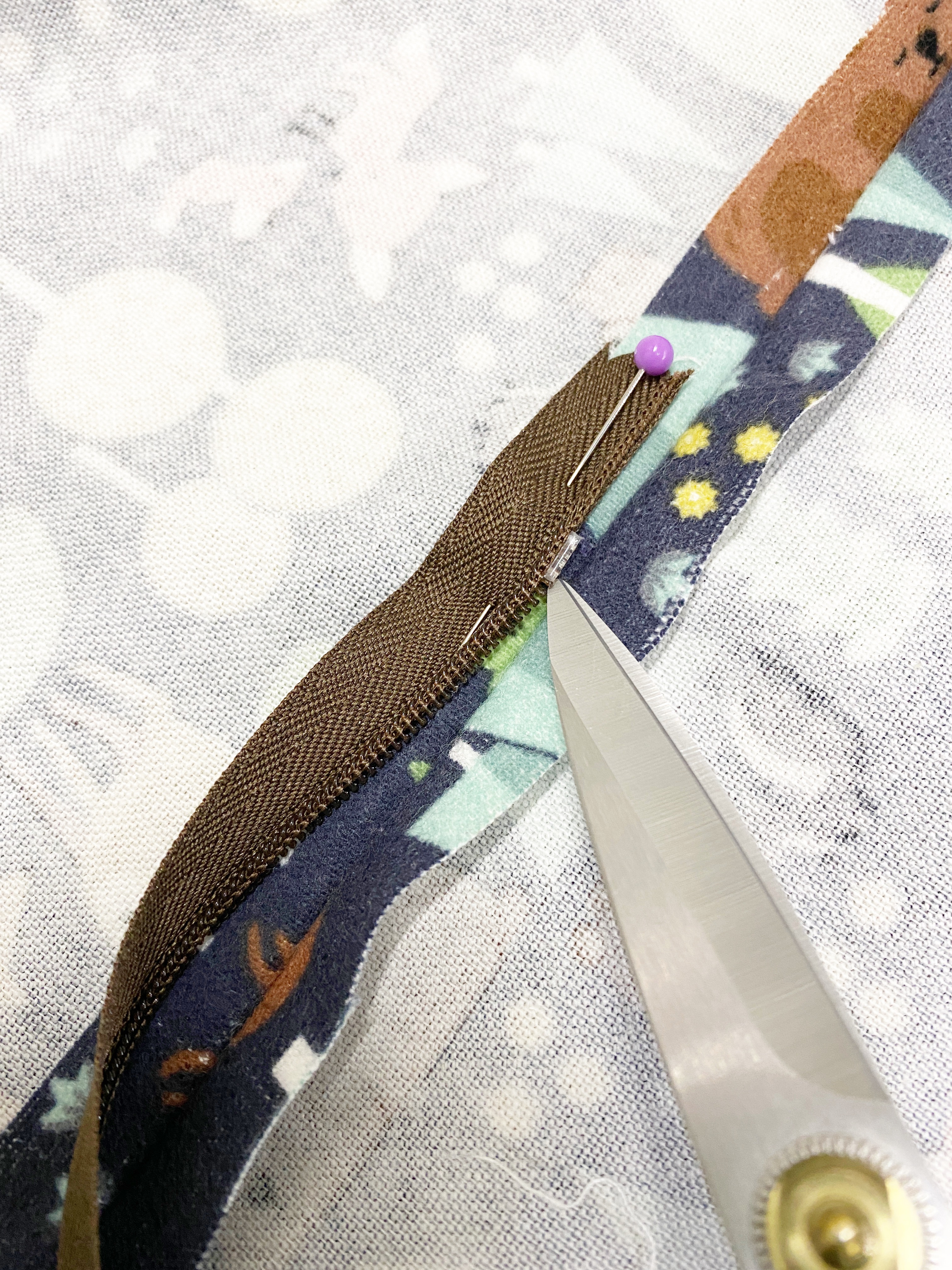
    Place your zipper teeth up (remember this is an invisible zipper) at the raw edge of the fabric in the center.

    With a pen, mark the fabric where the zipper teeth begin and behind the zipper stopper.

    Remove the zipper.

    Step 4: Prepare the zipper casing

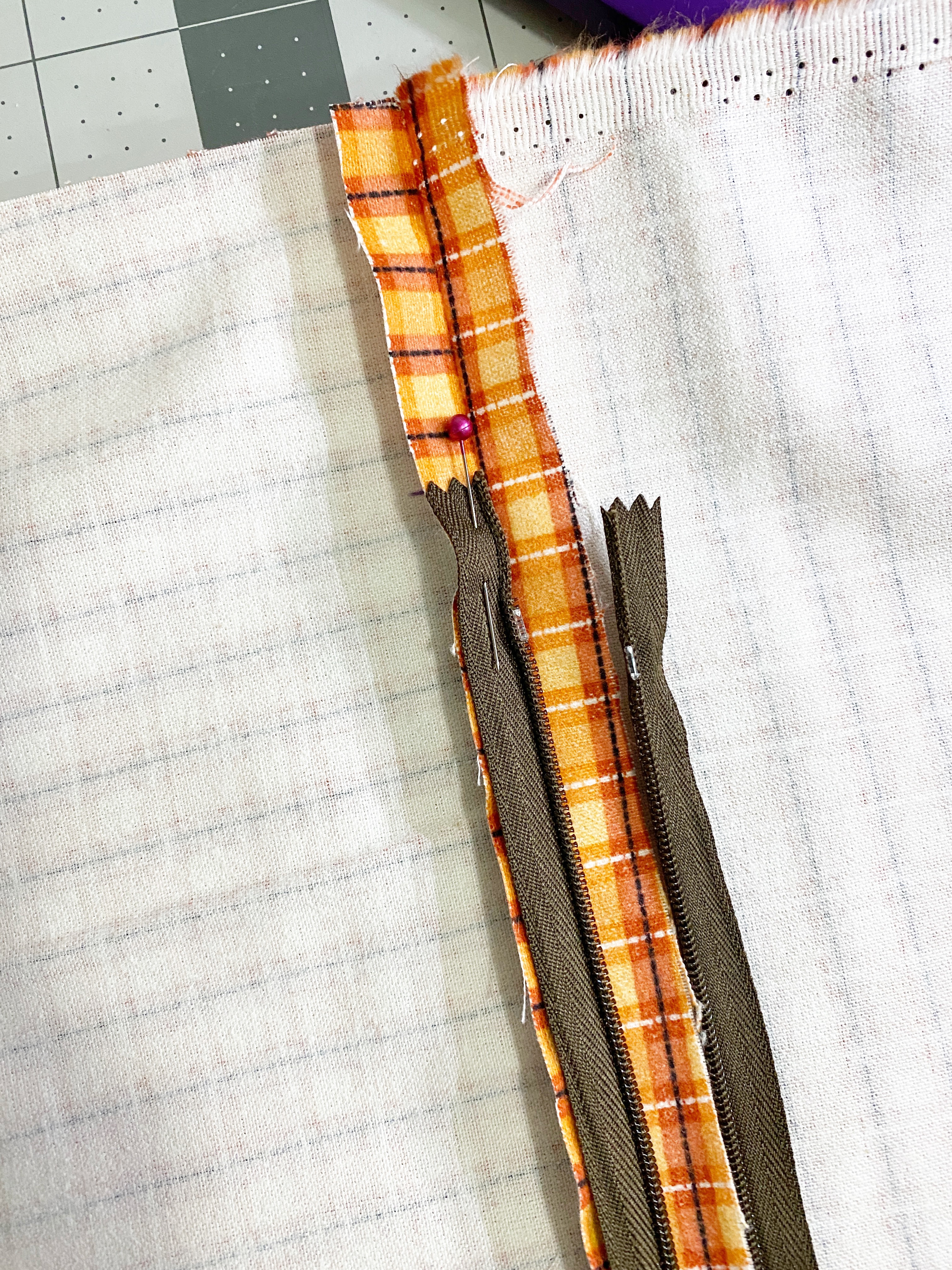
    With right sides together, sew a straight stitch to the first marked line and backstitch. Without cutting the thread, increase your stitch length to 5.0, stitch a basting stitch to the second line, and backstitch again. Without cutting the thread again, decrease your stitch length back to the original length and continue stitching to the end.

    Finger press the seams open.

    Find the line you drew and place the zipper back in place with the zipper teeth up. Make sure the zipper teeth are in the center.

    Step 5: Sew the zipper in place

    If your machine comes with an invisible zipper foot, attach that to your machine. If you only have a zipper foot, use that.

    Start sewing at the beginning of the zipper tape. You want to stitch as close to the zipper teeth as possible.

    Repeat on the other side of the zipper.

    Note for the invisible zipper foot: when you sew the other half of the zipper, open the basting stitch so that the foot does not butt up against the zipper foot.

    Once your zipper is sewn in place, open and close the zipper to ensure the fabric does not get in the way.

    Step 6: Sew the pillow cover closed

    Open the zipper halfway, and with right sides together, sew the three remaining sides.

    Step 7: Turn and insert the pillow form

    Trim the edges of the fabric if it shifted and round the corners to reduce bulk.

    Turn inside out and insert the pillow form.

    Enjoy your floor pillow!

    How many pillows will you make? I would love to see your pillows.

     Supplies used:

    There are some compensated affiliate links used at no cost to you.

     Bernina 570QE       

    Thank you so much for stopping by!

    Aurifil Artisan October Challenge – Bag Making

    Hello everyone!! I’m here today participating in the Aurifil Artisan October Challenge – Bag Making! Yayy!!

    I’m pretty excited about this challenge because I started my sewing journey with a tote bag. My daughter taught me how to sew a tote bag. I was so excited to see the finished bag. I held it up next to my daughter’s bag and laughed so hard. My handles were all wrong. My daughter said, “Mom, don’t worry, it can go on your bike handles.” I laughed even harder because I didn’t own a bike.

    Since that day, I’ve been making bags and loving it.

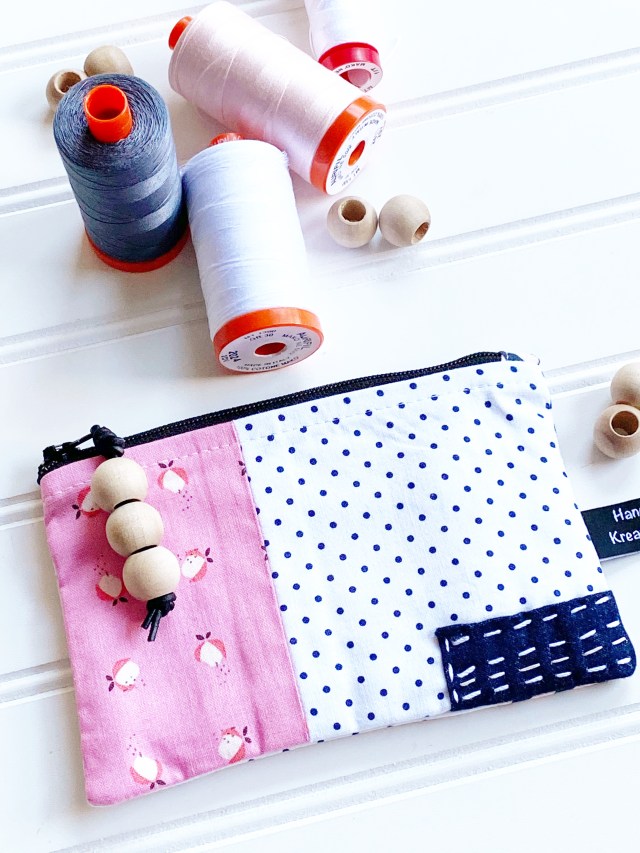
    Take a look at my mini bag:


    This mini bag perfect for my daughter. Her keys, money, and ID can fit in this mini bag when we are going out. Now she can put her belonging in my bag and find them when she needs them, LOL!

    sashiko stitching back

    Bag Elements:

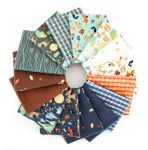
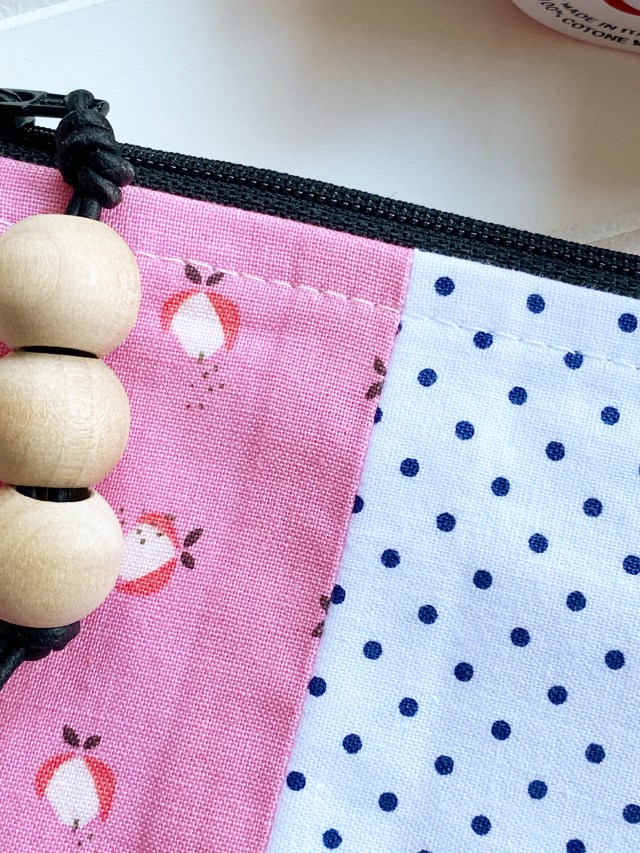
    I used 5 different fabric patterns. Matching up the different fabrics was fun, and I need to do it more often.

    The lining is just a cute as the outside of the bag.

    Inside of the bag

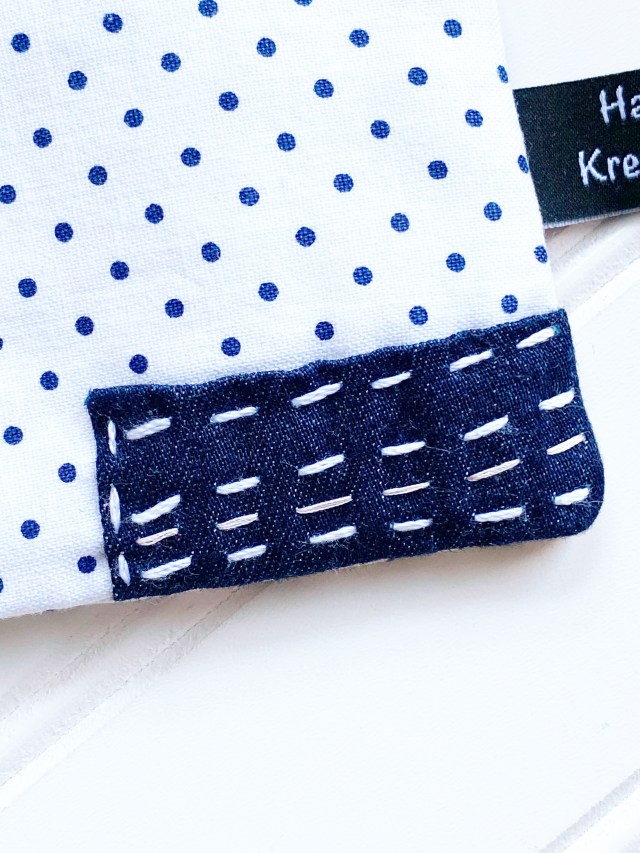
    I learned how to do Sashiko stitching some time ago. I love adding it to different projects. It was a must for this one. It adds texture and dimension.

    Aurifil thread is perfect for a bag like this. The different thread weights create the texture.

    The beaded zipper pull is a fun element that matches the fabric perfectly.

    Beads

    Take a Closer Look:

    Sashiko stitiching

    sashiko stitching back

    Making this bag was fun and took no time at all. I want to make a bigger version and possibly add a wristlet. Now that would be cute.

    Pattern found in the Making No. 6 Magazine.

    Thanks for stopping by!

    Hand to Hand Cowl + Tutorial

    Hello everyone! I’m here today to show you how to create a beautiful Hand to Hand Cowl for the fall.

    The cold season is upon us, and I must admit it’s not my favorite. I’m a spring and summer lady. The cold weather is not my friend. I find it harder to warm up than to cool down. So, I’m always looking for outerwear to keep me warm. 

    Let’s take a look at my Hand to Hand Cowl:

    Hand in hand finish product

    I just love how this Cowl looks. The best part is how easy it is to make them using just a couple of fat quarters!! Yes, I know, crazy, right!

    Let’s talk about this fabric collection:

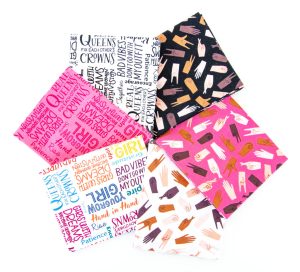
    hand in hand fabric

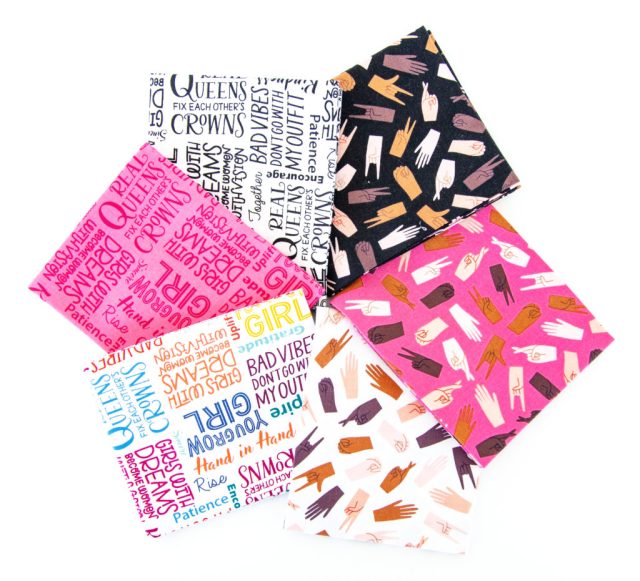
    This collection celebrates common sisterhood. It comes with six patterns and two-panel options. I love the bright, bold multi-color palette that comes with this collection. Hand in hand was created by Amber Kemp-Gerstel of Damask Love. I had the pleasure of meeting Amber years ago at a craft convention in LA. Both of us were heavy in the papercraft world, so it’s nice to see her transition into the fabric world. 

    Materials:

    Hand in Hand fabric
    Sewing Machine
    Thread
    Cutting Mat
    Pins
    Sewing Needle
    Rotary Cutter

    Finished Size:

    29.5″ x 16.75″ 

    Here’s how to create this Cowl:

    Cut out 6 fat quarters from the different fabrics. I used only two prints.

    Line the prints on your table into two rows of three of the fat quarters. 

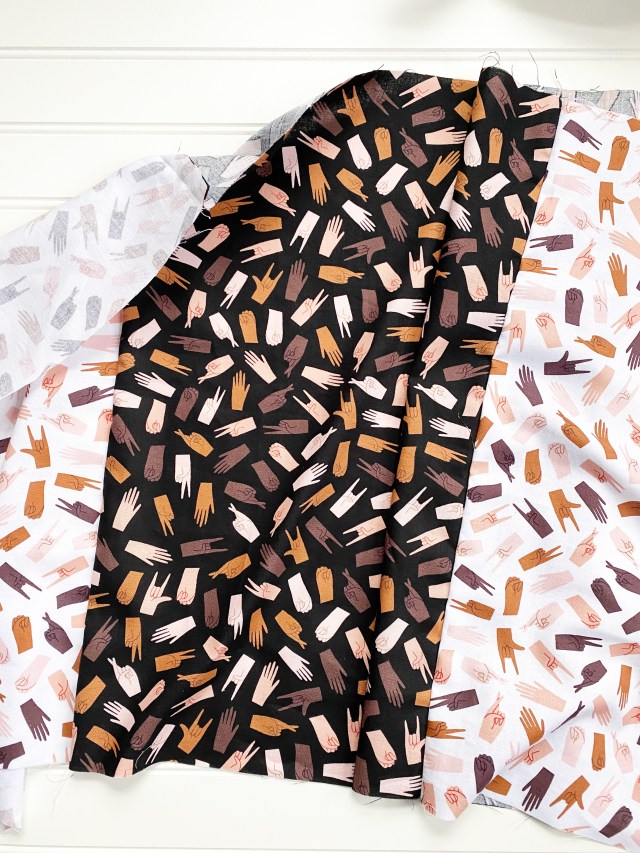
    With right sides together, sew the first two fat quarters on the 18″ side with a 1/2 seam allowance.

    Sew the third fat quarter in the same manner to the second fat quarter in that row.

    hand in hand crowl top row

    Repeat for the second row. 

    hand in hand bottom row

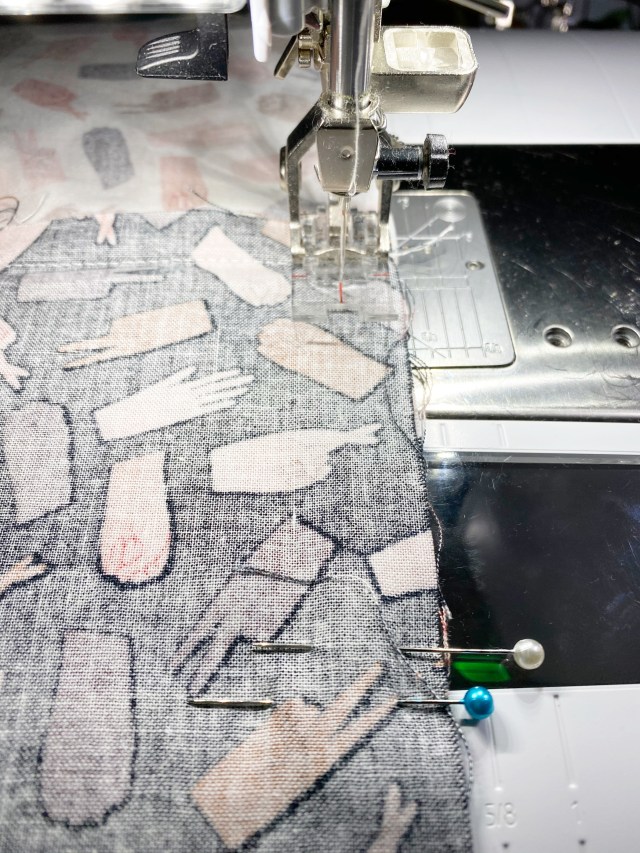
    Now, place the two rows right sides together and stitch down the top of the long side with a 1/2 seam allowance. Repeat on the bottom long side.

    Turn the entire piece right side out. Iron.

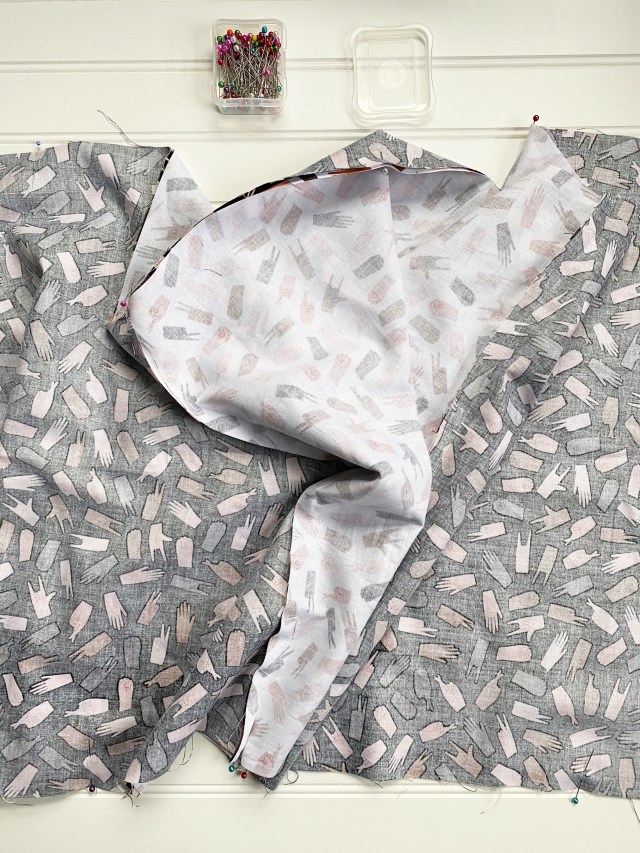
    Now turn the piece back inside out, like your peeling a banana so that the raw edges line up right sides together. 

    hand in hand turn back on itself

    Pin in place, matching the seams. Leave a 3-inch hole for turning. 

    hand in hand pinning

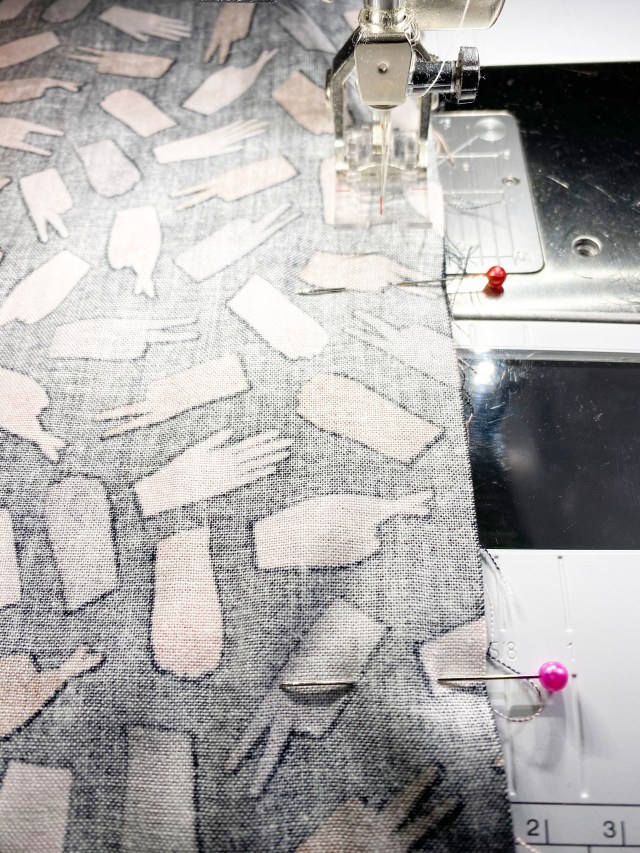
    Sew in a circle with a 1/2″ seam allowance.

    hand in hand sewing close

    I used two pins to remind me to stop sewing here. 

    hand in hand sewing

    Turn the piece inside out through the 3-inch hole. 

    hand in hand turning

    Hand stitch the hole closed with coordinating thread. 

    Now you’re done!! That was so easy, and it took an hour from start to finish. 

    hand in hand finish product

    Now it’s your turn!

    Supplies Used:


    hand in hand fabric    Bernina 570QE


    Thank you so much for stopping by!

    Ready, Set, Splash Baby Gift Set and Tutorial

    Hello everyone! I’m here today with an adorable baby gift set sewing project for those who are beginners and those who are more advanced.

    Do you have a baby at home or a baby on the way? Or perhaps you know of someone who is having a baby and want to make them a handmade gift. This Ready, Set, Splash baby gift set is the perfect gift.

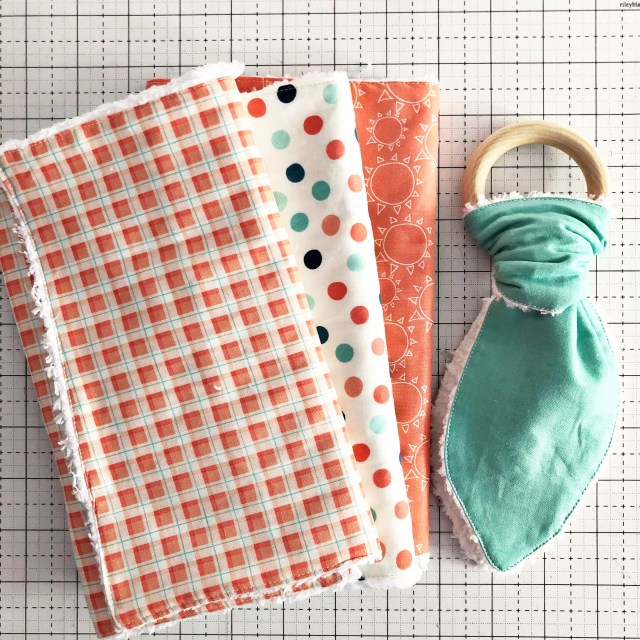
    Let’s take a look at this Ready, Set, Splash gift set:

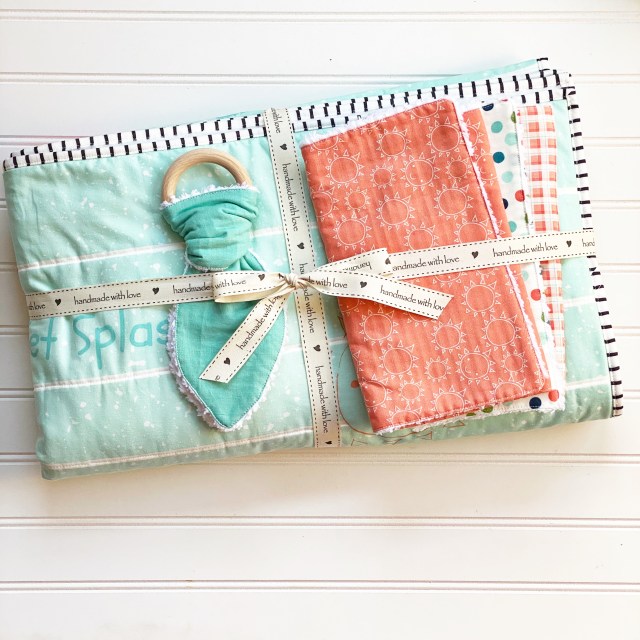
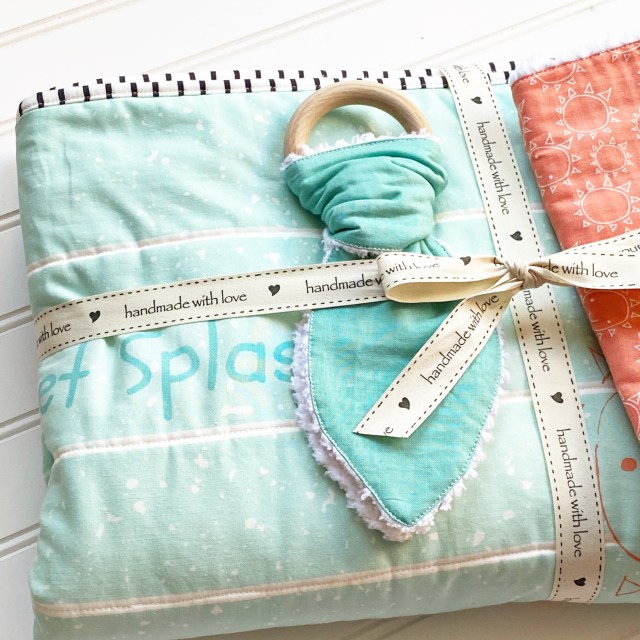
    baby gift set

    A set of burp cloths, a teether, and a quilt – It doesn’t get any better than that. Who wouldn’t love a new baby gift set like this?

    Let’s talk about this fabric collection:

    Ready, Set, Splash! was created by Sandy Gervais for Riley Blake Designs is one of the cutest fabric collections I’ve seen in a long time. All of the tiny critters and prints in blue, coral, and green are fun to look at. This collection has 25 prints and one panel.

     Materials:

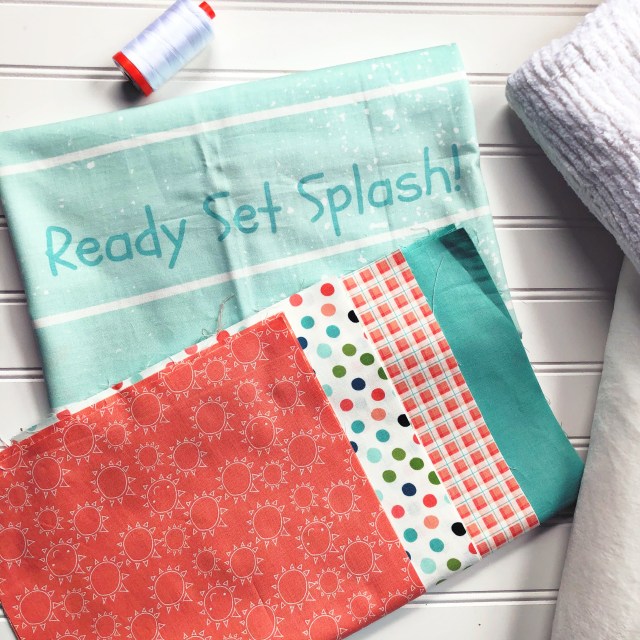
    Ready, Set, Splash! fabric
    Chenille White
    Rotary Cutter
    Cutting Mat
    Wonder Clips
    Binding fabric
    Minky fabric
    Wooden Teether
    Sewing Machine
    Walking Foot
    Scissors

    baby gift set - supplies

    Finished Size:

    Burp Cloths: 9.5 inches by 16.5 inches

    Teether: 3 inches by 7 inches on the ring

    Quilt: 35 inches by 43 inches

    Note: sew 1/4 seams unless otherwise noted. 

    Here’s how to create this baby gift set:

    Birth Cloths:

    Cut one piece of the Ready, Set, Splash fabric 10 inches x 17 inches.

    Cut one piece of Chenille fabric 10 inches x 17 inches.

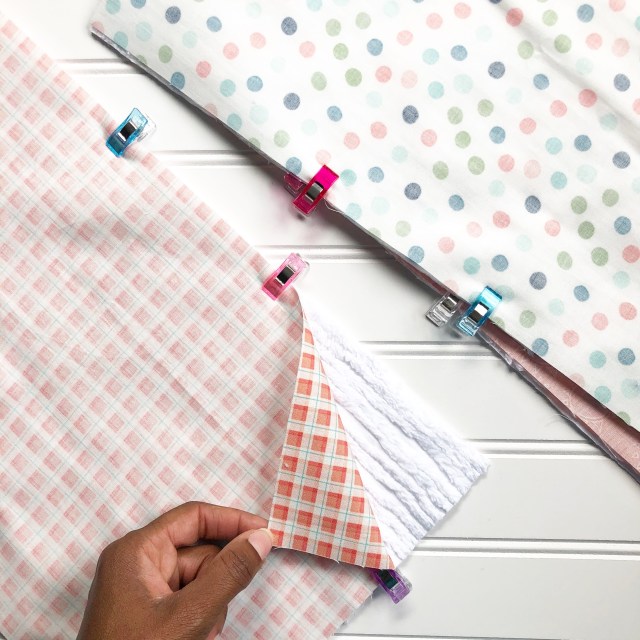
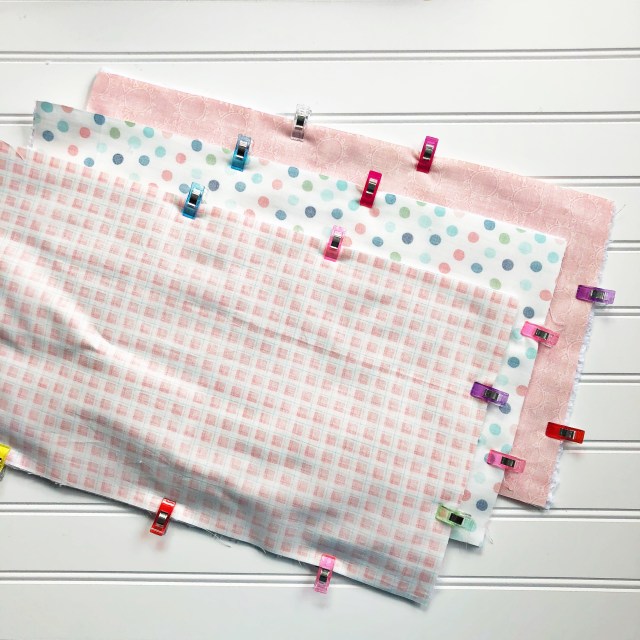
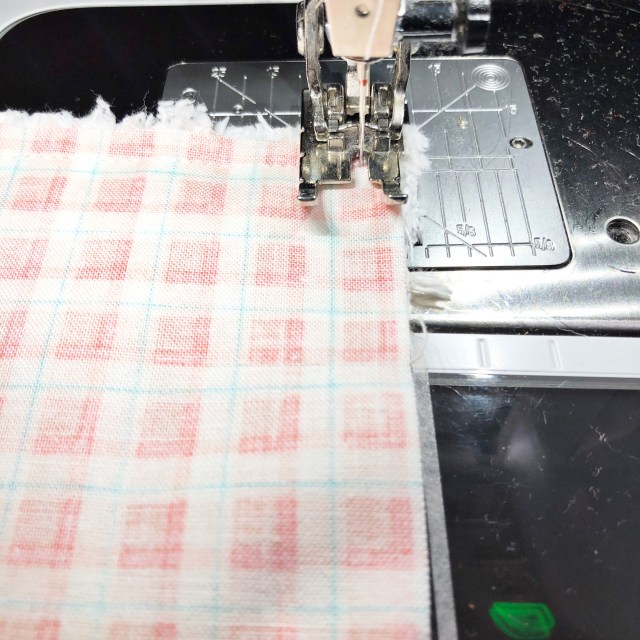
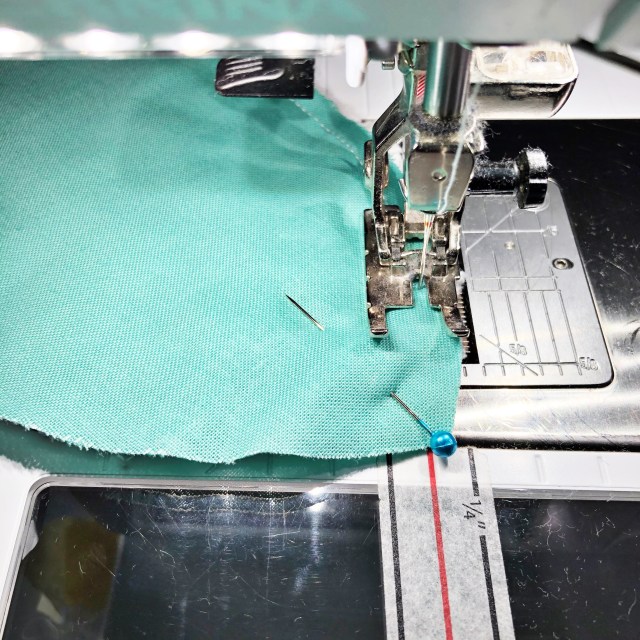
    With right sides together, sew around the entire piece leaving a 3 inch opening for turning.

    baby gift set - burp cloths

    baby gift set - burp cloths

    baby gift set - burp cloth

    Clip the corners to remove the bulk.

    Turn inside out and sew 1/8 seam around the entire piece closing up the opening.

    Repeat steps for the reminding two burp cloths.

    baby gift set - burp cloths

    baby gift set - burp cloths

    Baby Teether:

    I used my Cricut to cut the Ready, Set, Splash, and Chenille fabric.

    With right sides together, sew around the entire piece leaving a 3 inch opening for turning on the sides not close to the tip.

    baby gift set - teether

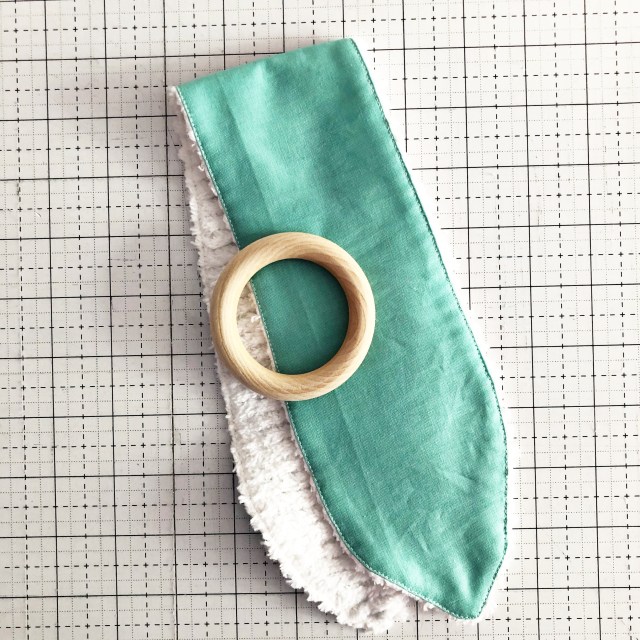
    Turn inside out and sew 1/8 seam around the entire piece closing up the opening.

    baby gift set - teether

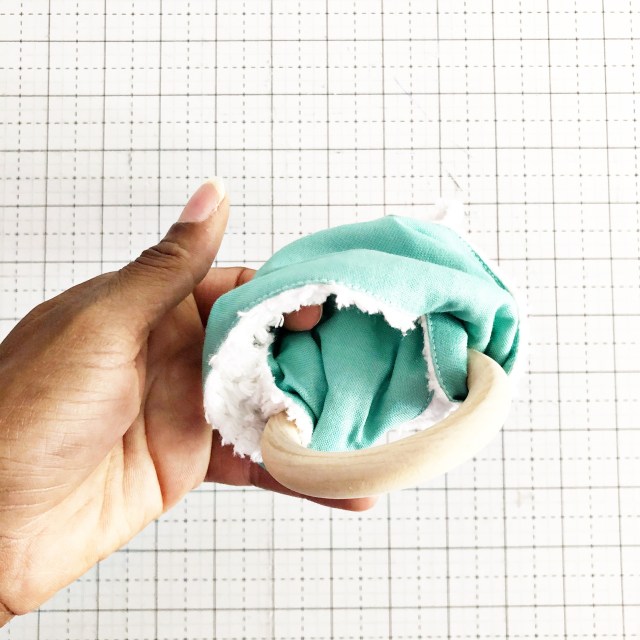
    Tie the material around the wooden teether.

    baby gift set - teether

    baby gift set - teether

    baby gift set - teether

    baby gift set - teether


    Baby Quilt:

    Create a quilt sandwich with the Ready, Set, Splash Deep Sea Panel, batting, and Minky (in that order from top to bottom).

    Baste the layers with spray and/or pins.

    Quilt the layers together to your desire.

    baby gift set - quilting

    I free-motion quilted the above circles.

    baby gift set - quilting

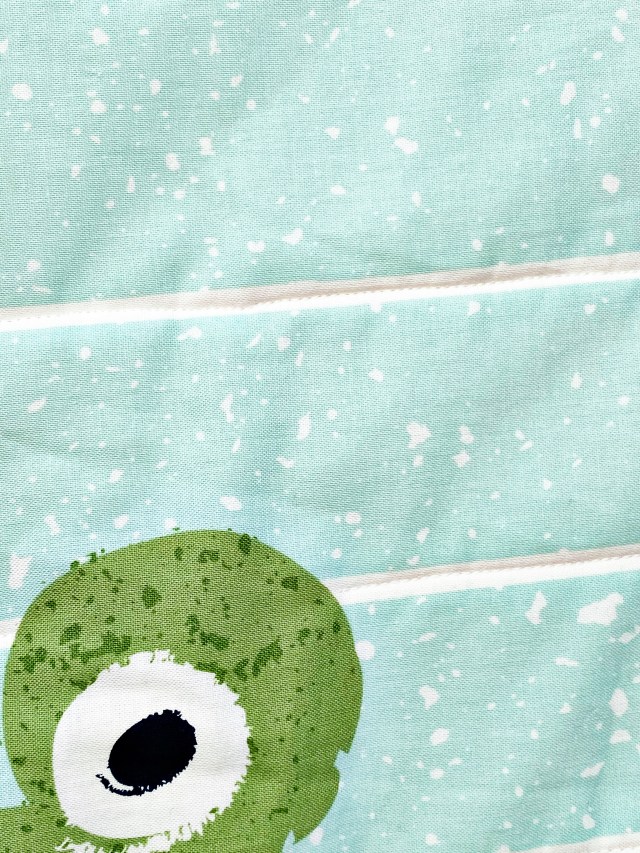
    For the top half, I just sewed straight lines across the quilt top, not crossing over the frog’s face and body.

    Once the quilting is done, square up all of the sides and add the binding.

    Cut out your desired binding and stitch the pieces together, enough to go around the entire quilt.

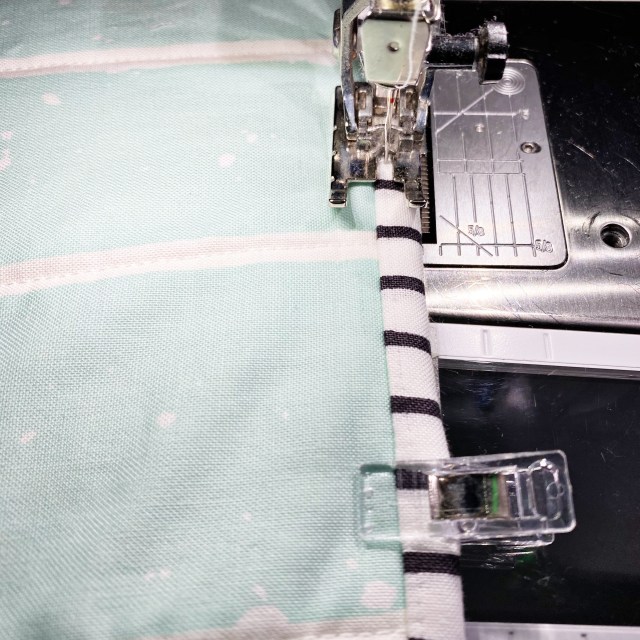
    baby gift set - binding

    baby gift set - binding

    Check out the finished quilt:

    baby gift set - quilting

    Don’t you just love this quilt? It’s so cute.

    baby gift set - teether

    Great teether!

    baby gift set - burp cloths

    Absorbant burp cloths!

    This gift set is actually on its way to my cousin, who had her first baby this past weekend. She is a new mom, so I hope this set brings her some comfort.

    The colors are perfect for a boy or a girl.

    Supplies Used:


    Bernina 570QE


    Thank you for stopping by,

    How to Create Reusable Facial Scrubs

    Hello everyone!! I’m here today with a project for you that is fun to make. I’m creating reusable facial scrubs for my daughter and niece. They are at the age were their face care is so critical to them. They have a morning and night routine. It tickles me.

    This idea came about when they asked if I could buy them the paper cloths facial scrubs. I let them know that I could make them reusable facial scrubs.

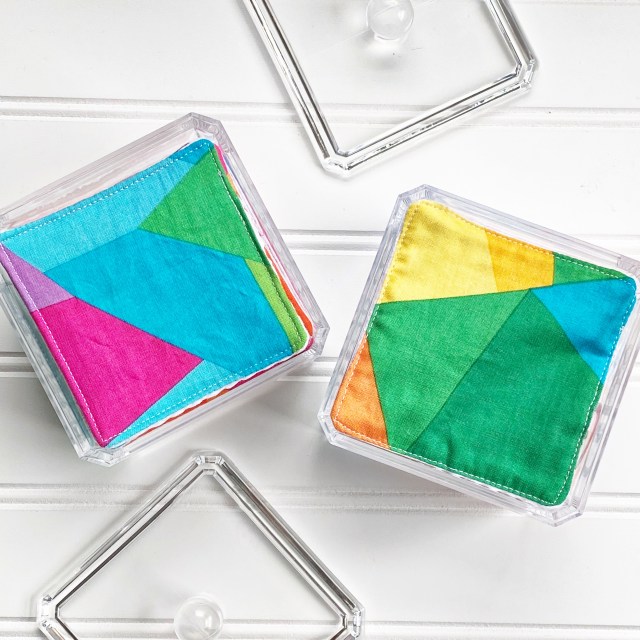
    Let’s take a look at my Reusable Facial Scrubs:

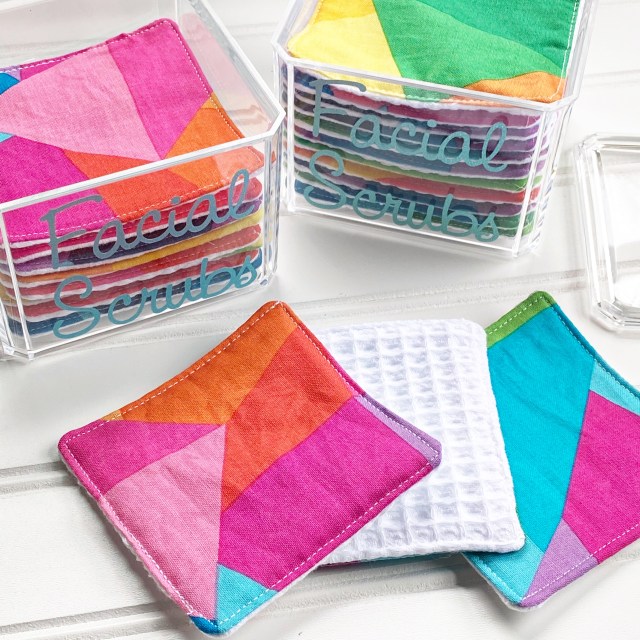
    create

    Creating these reusable facial scrubs was a breeze to make. You can make a dozen in no time.

    Let’s talk about this fabric collection:

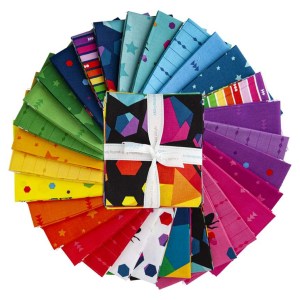
    The Create Collection by Kristy Lea of Quiet Play for Riley Blake Designs. This collection has 30 different fabric prints. They are colorful and playful.

    Materials:

    Create Main Multi
    White Aurifil Thread
    Waffle Fabric
    Rotary Cutter
    Cutting Mat
    Wonder Clips
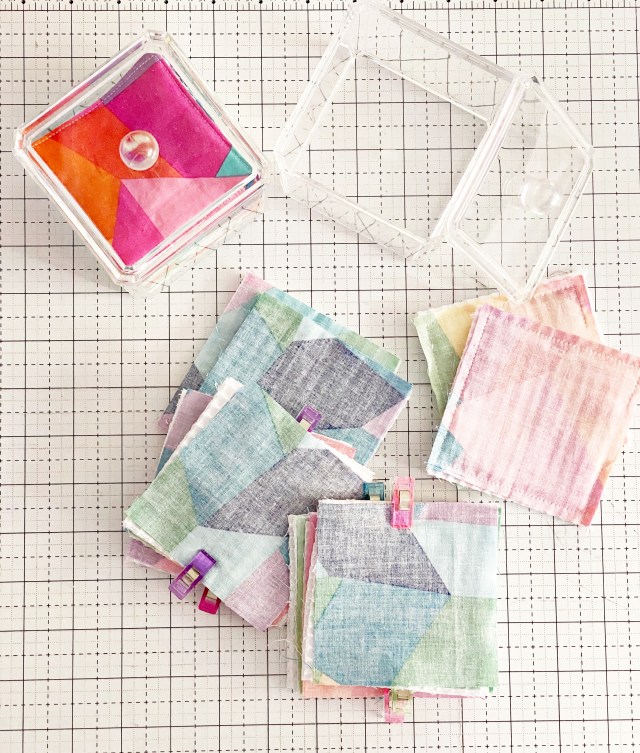
    Acrylic Canister Jar

    Finished Size:

    3 inches by 3 inches

    Here’s how to create these facial scrubs:

    Cut 12 pieces of the Create fabric to 3.25 by 3.25.

    Cut 24 pieces of the Waffle fabric to 3.25 by 3.25.

    Each scrub will consist of one piece of Create fabric and two-piece of the Waffle fabric.

    create reusable facial scrub

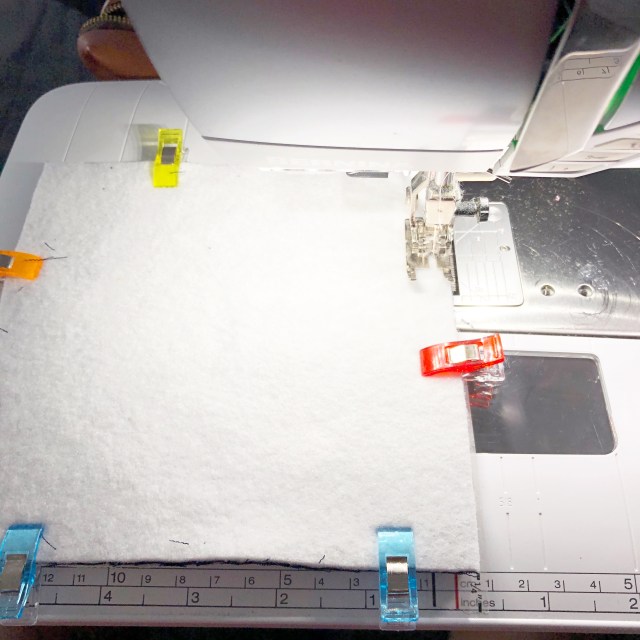
    With right sides together, sew a quarter inch seam around the perimeter, leaving a 3-inch hole for turning.

    create reusable facial scrub create reusable facial scrub

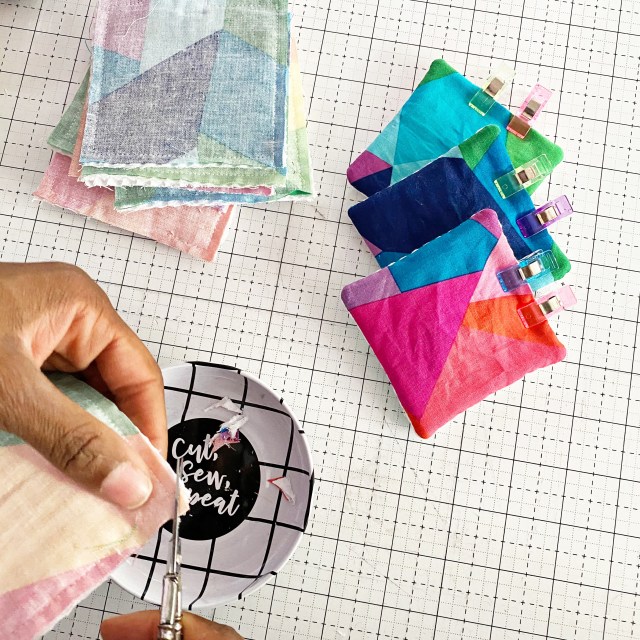
    Clip the corners to remove the bulk.

    create reusable facial scrub

    Turn inside out. Fold the opening in a quarter of an inch and iron.

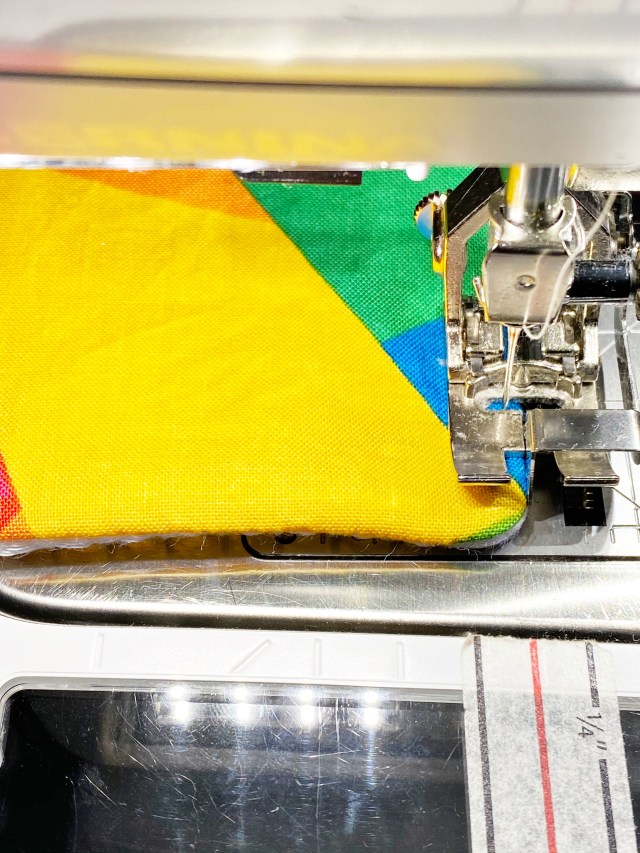
    Stitch about 1/8 inch around the four sides closing up the hole.

    create reusable facial scrub

    Repeat with the rest until you have 12 reusable facial scrubs.

    Easy as 1-2-3!

    create reusable facial scrub

    create reusable facial scrub

    What do you think? Will you create your own facial scrubs? Please let me know.

    Supplies Used:


    Bernina 570QE

    Thank you so much for stopping by!

    How to Create a Set of Sashiko Mug Rugs with Aurifil 12wt Thread

    Hello everyone! I’m so happy to be here today to show you how to create a set of sashiko mug rugs with Aurifil 12wt thread.

    I’ve had some recent bumps in the road, but I’m on the mend in the right direction. I have a lot of catching up to do, but I’ve promised myself to catch up slowly, and that is what I intend to do!!

    Today, it’s all about hand-stitching. It’s comfortable and therapeutic to do, especially if getting to your sewing machine isn’t an option at the moment.

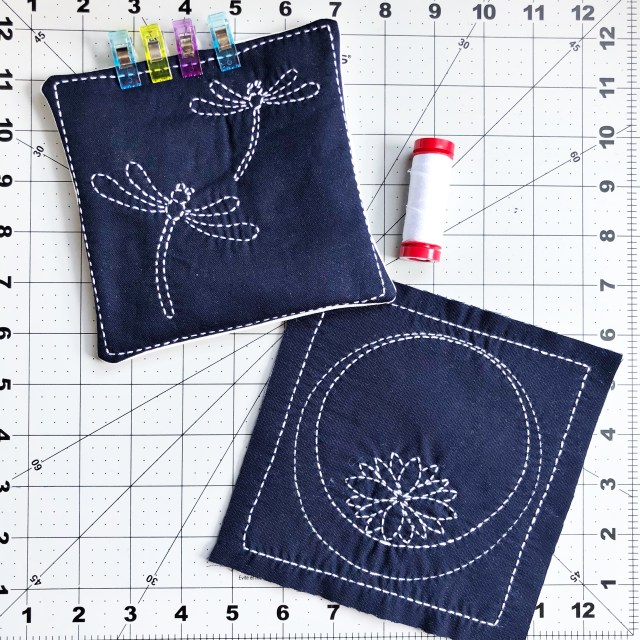
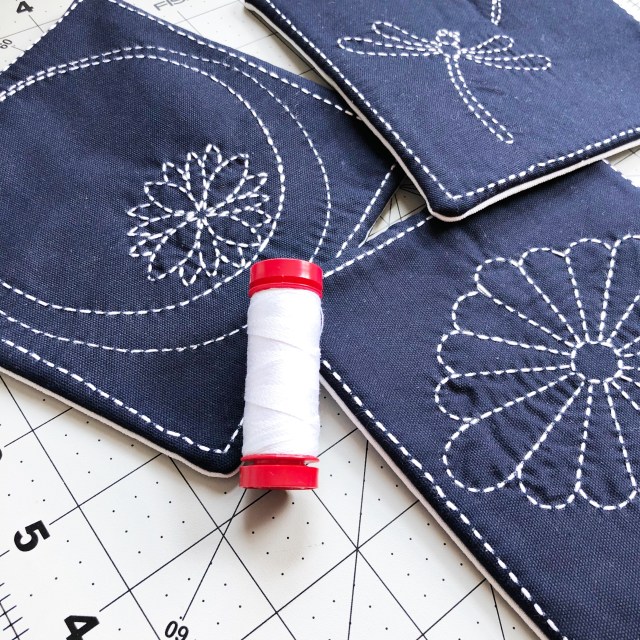
    Take a look at my brand new Sashiko Mug Rugs:

    sashiko mu rug - aurifil 12wt thread

    Such beautiful patterns that would look amazing on any coffee table.

    I love using Auriful’s 12wt thread because it’s thick and stands out against this pretty blue fabric.

    Aurifil 12wt Thread info:

    It is the heaviest weight thread that Aurifil offer and is perfect for:

    -hand applique
    -hand embroidery
    -hand quilting
    -cross stitch
    -embellishment
    -handmade lace
    -machine applique
    -blanket stitch
    -machine embroidery (especially for designs that use a longer stitch length)
    -machine art quilting
    -Sashiko
    -redwork
    -lower looper serging
    -longarm quilting (which I hope to do someday soon).

    Imagine all of those projects that this thread is perfect for. Let me show you how I used it on my project.

    Materials Needed:

    Aurifil 12wt thread white
    Sashiko panels
    Sashiko needle
    Scissors
    Cutting Mat
    Rotary Cutter
    White Linen Fabric
    Fusible Fleece Interfacing
    Point Turner

    Finished size:

    5.75 inches by 5.75 inches

    Here’s how I created these mug rugs:

    Choose which sashiko panels you want to use.

    sashiko panels

    Thread your needle with Aurifil 12wt thread and tie a knot on both stands.

    Stitch using double strands.

    Follow the stitch lines on the panel for accuracy.

    stitch each line

    Once the entire piece is completed, place it on top of the fusible fleece interfacing and square up each panel.

    Adhere the fusible interfacing to the panel with the iron.

    Lay the sashiko panel right sides together with linen fabric and pin.

    Machine stitch or hand-stitch all four sides together, leaving a 3 inch opening for turning.

    machine stitch-BERNINA 570QEE

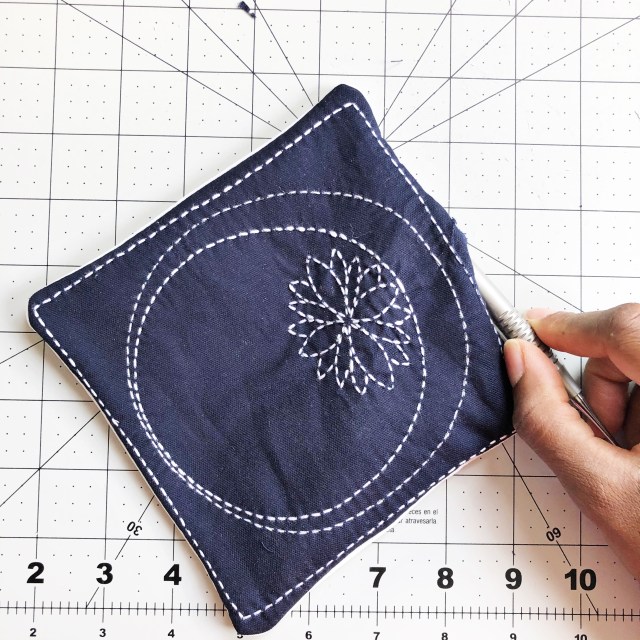
    Once all four sides are stitch, turn the mug rug inside out.

    Use a point turner to poke out the corners.

    pushing out the corners

    Turn in the opening and hand-stitch it close using the 12wt thread.

    hand-stitch closure

    Iron the mug rug to flatten it and take out any creases.

    Finished!!

    aurifil 12wt thread

    aurifil 12wt thread

    Aurifil 12wt thread

    Here’s my niece using a set of these mug rugs:

    Supplies Used:

    12wt thread small spoolsashiko panelsBernina 570QE


    Thank you so much for stopping by!


    Nobody Fights Alone Face Covering

    Hello everyone!! I’m here today with a project for you that I thought I would have created back in March. The thing is I had no desire to make any of them since I work at a hospital and have to wear them all day long. Have you guessed what I’m talking about?

    Yes, mask, wait, no face-covering. I decided to make some face-covering because an axillary group at my hospital decided to ask people from the community to make face-covering for individuals who can’t afford to get them and for those that live in hots spots within the hospital’s catchment area.

    I saw the Nobody Fights Alone fabric from Riley Blake Designs, I knew it was time to make some face-covering.

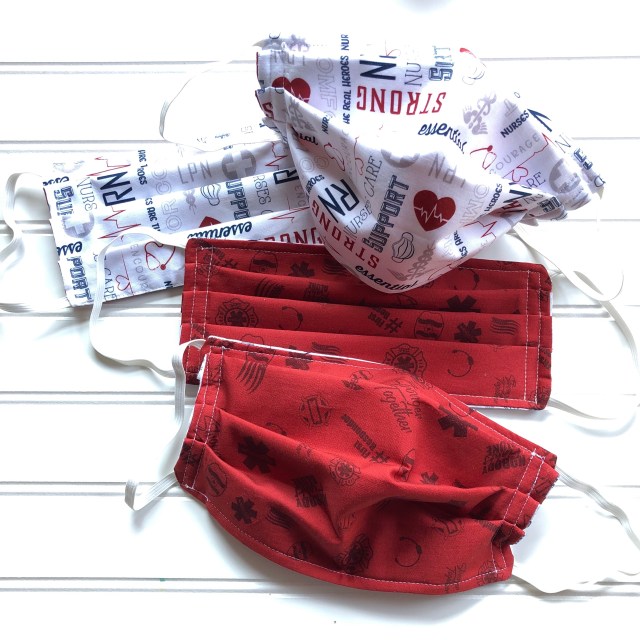
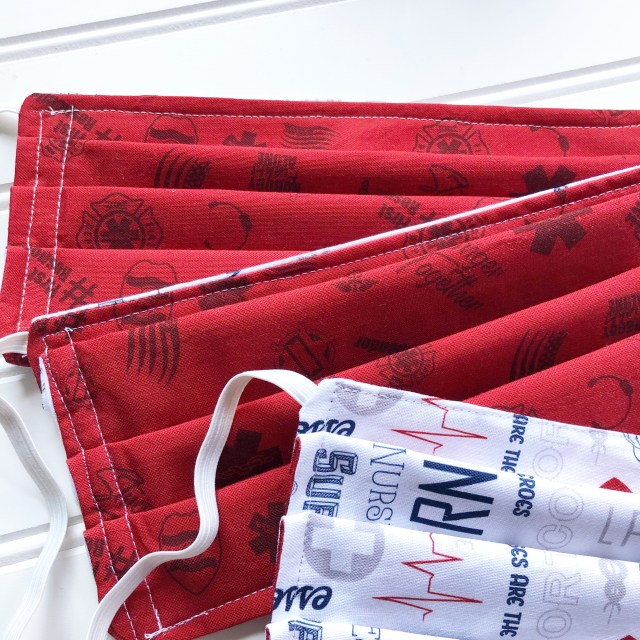
    Take a look at my Nobody Fights Alone Face Covering:

    Making these face covering was so easy. I guess everyone knows that already, LOL.

    Let’s talk about this fabric collection:

    Nobody Fights Alone includes 13 fat quarters and one 35″ panel. This collection features classic icons representing nurses, doctors, EMS emergency dispatch, firefighters, police, and military on backgrounds of red, white, blue, black, gray, and a camouflage print.

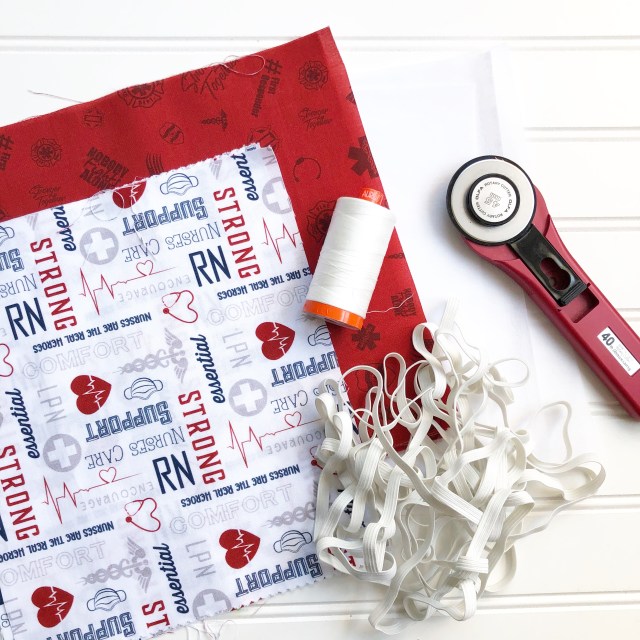
    Materials:

    Nobody Fights Alone Nurse Care Red
    Nobody Fights Alone First Responder Red
    White Aurifil Thread
    HeatnBond Sew-In Interfacing
    1/4″ Elastic Pins
    Rotary Cutter
    Cutting Mat

    Let’s see what it takes to make these cute face-coverings:

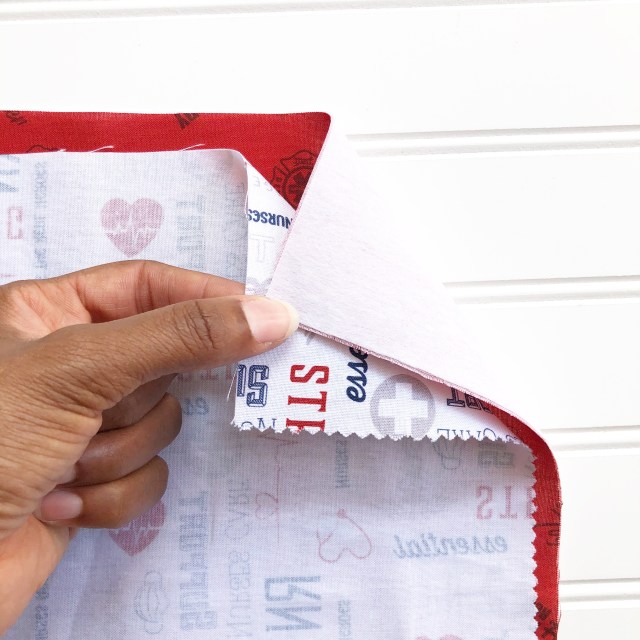
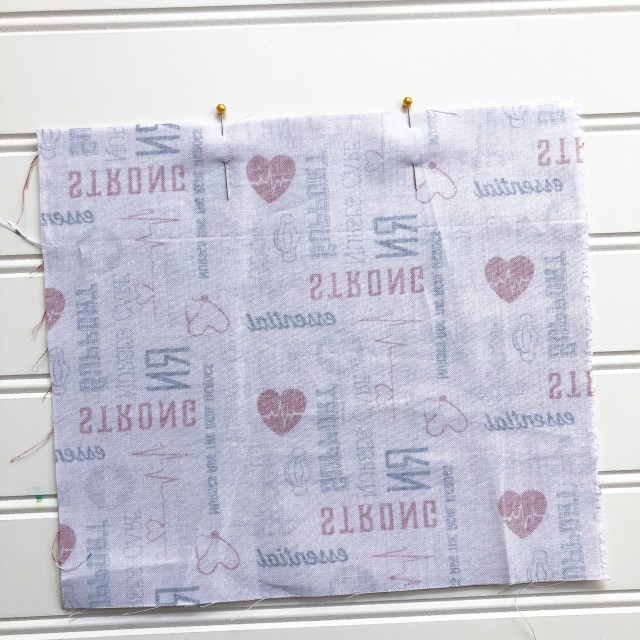
    Cut the fabric and interfacing to 9″ x 6″.

    With the right sides together, place the interfacing on the wrong side of the top layer.

    Sew the 9″ side of the fabric. Leaving an opening for turning.

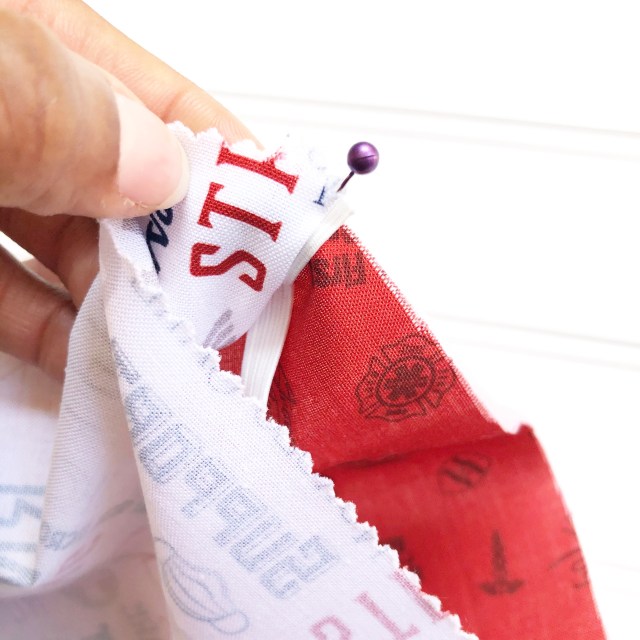
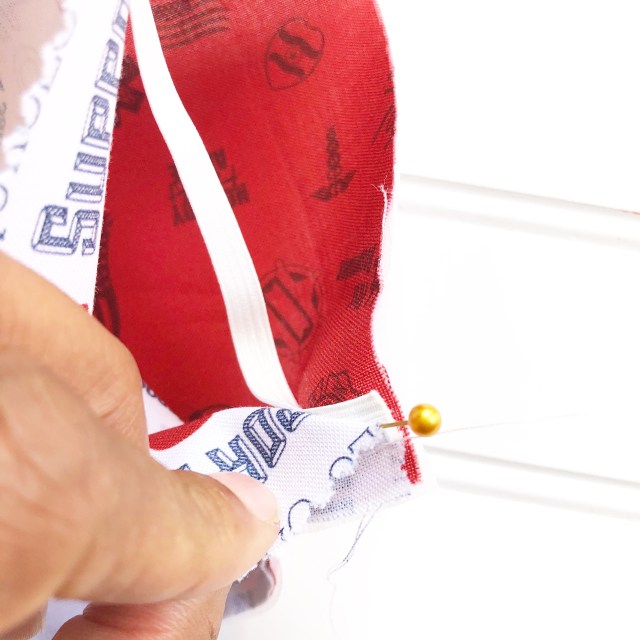
    Open the sides of the mask and add the elastic right up against the stitched lines. Try not to twist the elastic—pin in place.

    Sew down the side, stretching out the fabric. Backstitching over the elastic ends.

    Repeat on the other side.

    Turn the fabric inside out and iron.

    Fold three pleats and pin.

    Sew all the way around, closing the opening and keeping the pleats in place.

    Add a second stitch over the pleats for reinforcement but not necessary.

    I will make 50 of this face-covering so that my department can participate in the project!

    What do you think? Please let me know.

    Supplies used:


    Thank you,

    Goose Tales Halloween Fabric Basket

    Hello everyone!! I’m back again with another cute sewing project for you. Are you ready for Halloween?

    I know its months away, but since we’ve been on this stay at home order, days are combining with each other, and before you know it, Halloween will be here. I just hope we can celebrate it.

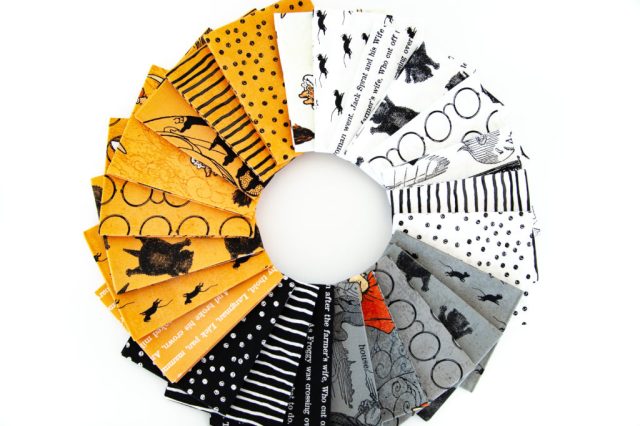
    With that said, I used a brand new fabric collection called Goose Tales by J. Wecker Frisch.

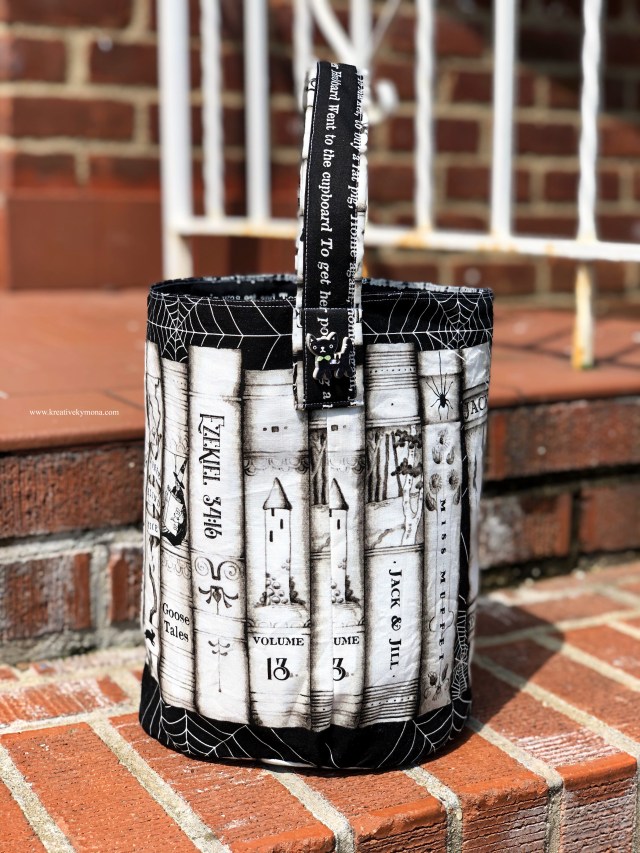
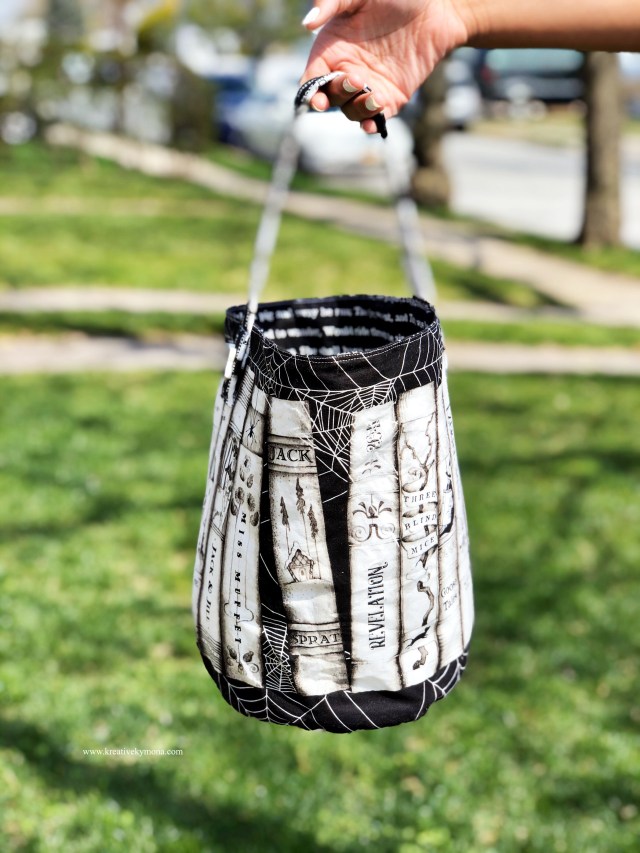
    Take a look at my Goose Tales Halloween Fabric Basket:

    Goose Tales fabric basket


    I love this fabric basket. It’s beautiful and deep for all of the candy my niece will collect.

    Let’s take about this fabric collection:

    Goose Tales was created by J. Wecker Frisch, a designer that I met last year when her Paperdoll collection was released. I actually won the entire set and bunch of other goodies in a contest. That was fun. I followed her ever since.

    This collection contains 24 different prints, 2-panel pieces, and 1 border stripe.

    Let’s dive into how to create your own fabric basket:

    Materials:

    1/2 yard of Goose Tales Book Spines Border Strip (outer fabric)
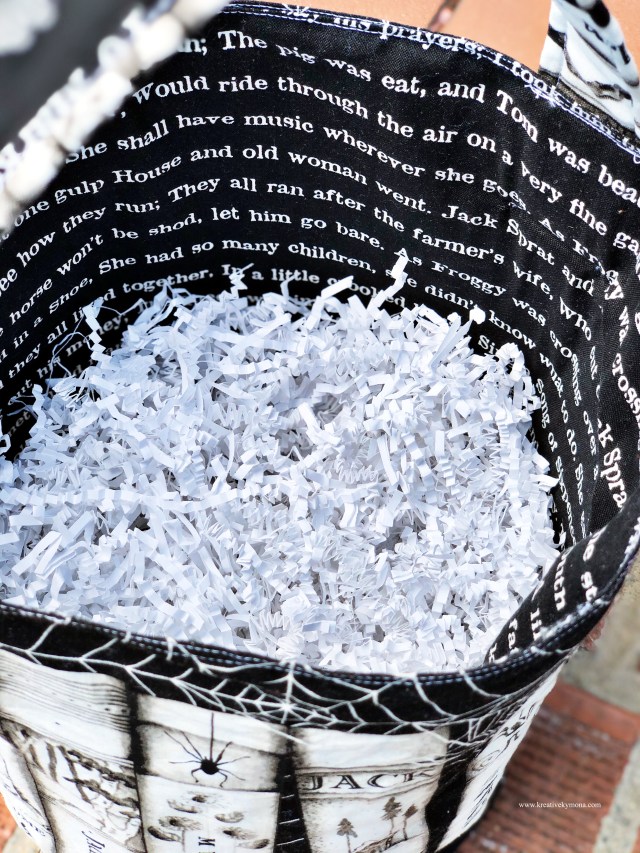
    1/2 yard of Goose Tales Text Black (lining fabric)
    Fusible Fleece Interfacing
    Button
    Pins
    Ruler
    Rotary Cutter
    Cutting Mat
    Scissor

    Instructions on how to create a Goose Tales Halloween Fabric Basket:

    Cutting fabric:

    Goose Tales fabric basket Materials

    Cut one piece of outer fabric and one piece of the lining to 27 inches x 11.5 inches.

    Cut one piece of interfacing to 26 inches x 10.5 inches.

    Cut one piece of the outer fabric for the bottom of the handle to 23 inches x 3.75 inches.

    Cut one piece of the lining fabric for the top of the handle to 23 inches x 2-3/8 inches.

    Cut one piece of interfacing for the handle to 23 inches x 1-1/8 inches.

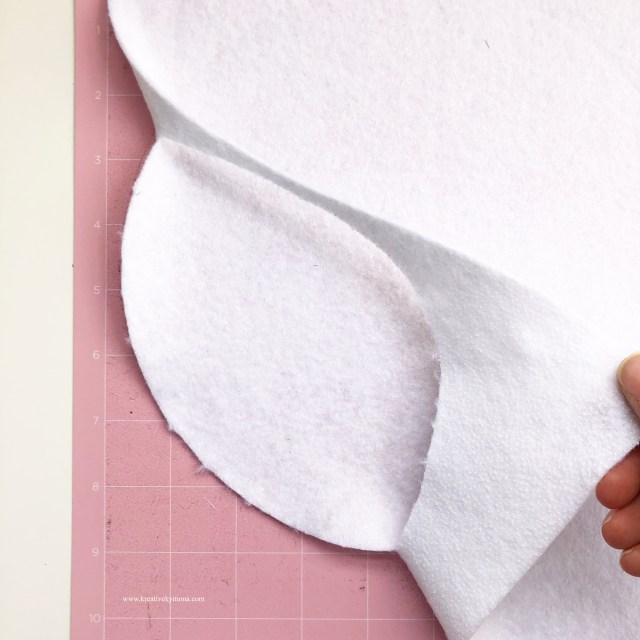
    Cut 3 circles out of the outer, lining, and interfacing to 8-3/4 inches.

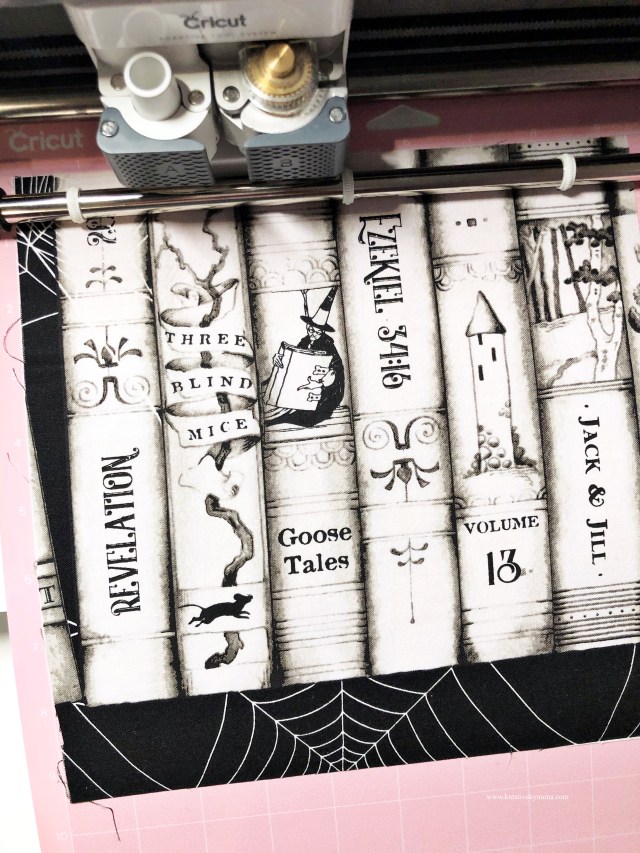
    (I used my Cricut Maker to cut the circles.)

    Goose tails halloween fabric basket

    goose tails halloween fabric basket

    Making the bag:

    Handles:

    With right sides together, sew the outer fabric and the lining together on the long side using a 1/4 inch seam allowance.

    Press the seam open.

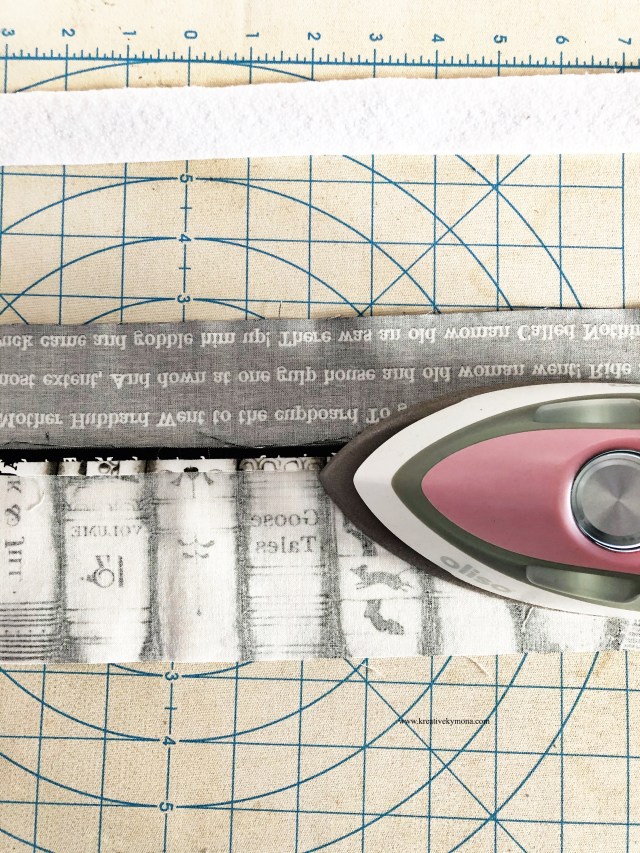
    Ironing

    Place the interfacing on the outer fabric piece close to the seam line.

    Fold the lining towards the seam.

    Fold the outer fabric towards the seam.

    Press.

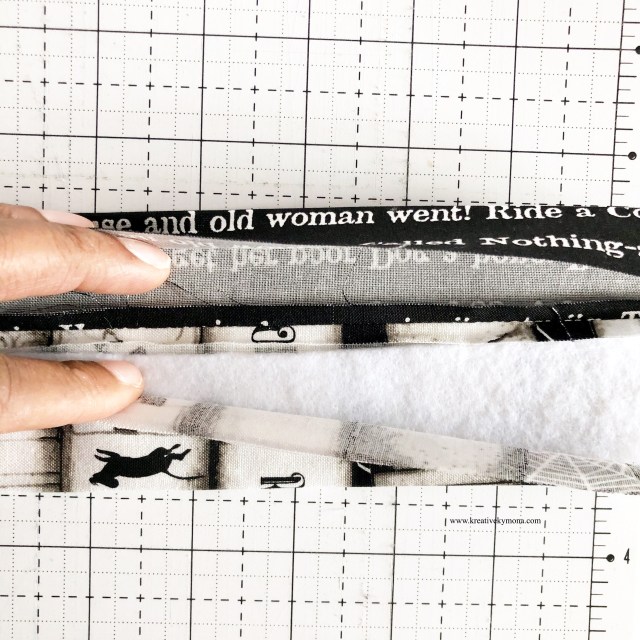
    fabric basket handles

    Fold the lining fabric over the outer fabric, leaving an accent trim on both sides. Press.

    Pin and topstitch on both sides of the handle.

    handle


    handle

    Bag:

    Place the lining fabric right side down.

    Place the interfacing on top and iron in place.

    Fold the lining fabric right side together along the short side and sew straight down using a 1/2 inch seam allowance. Press seams open.


    Iron the circle fusible fleece to the wrong side of the circle lining fabric.

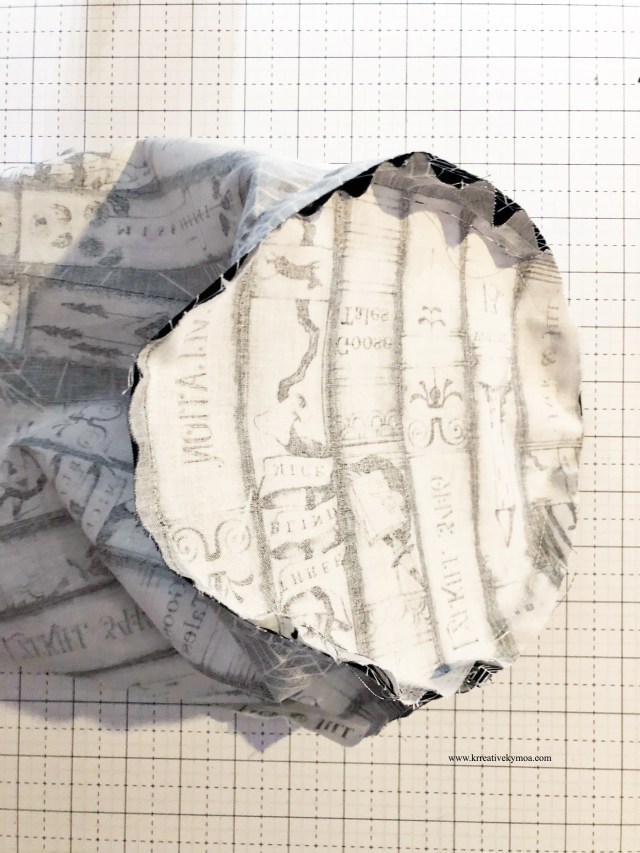
    Attach the bag base to the bag lining with pins. Sew a 1/2 inch seam allowance.

    Repeat the same steps for the outer fabric.

    Bag assesmble

    Place the outer piece inside the lining piece.

    Line the tops of both pieces and pin in place.

    Sew a 1/4 inch seam along the top, leaving about a 4-inch opening to turn the bag.

    Pull the bag right side out through the opening.

    Push the basket down, making sure the bottom edges meet. Make sure the seams match and smooth the fabric out.

    Add 2 lines of topstitching to close the hole.

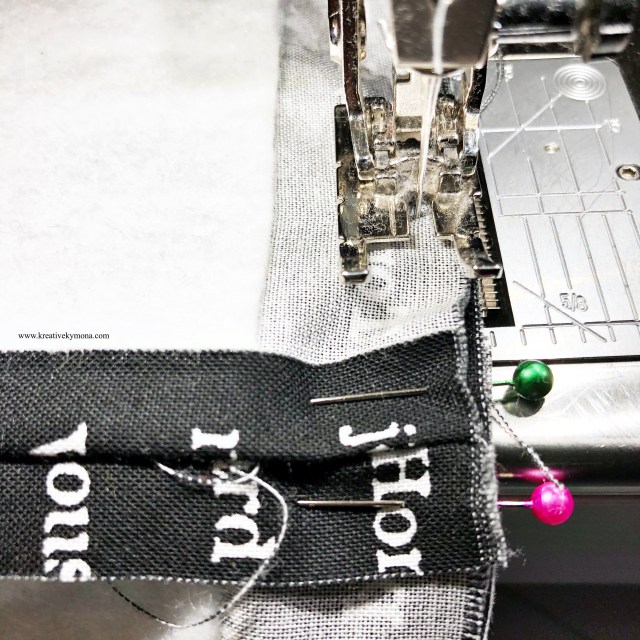
    Sew the handles in place.

    Sew a button on one side of the handle.

    The bag is done!

    Let’s take another look:

    What do you think? Would you try and create a Goose Tale Halloween Fabric Basket yourself? I would love to see it.

    Supplies used:

    Bernina 570QE

    Thank you so much for stopping by!